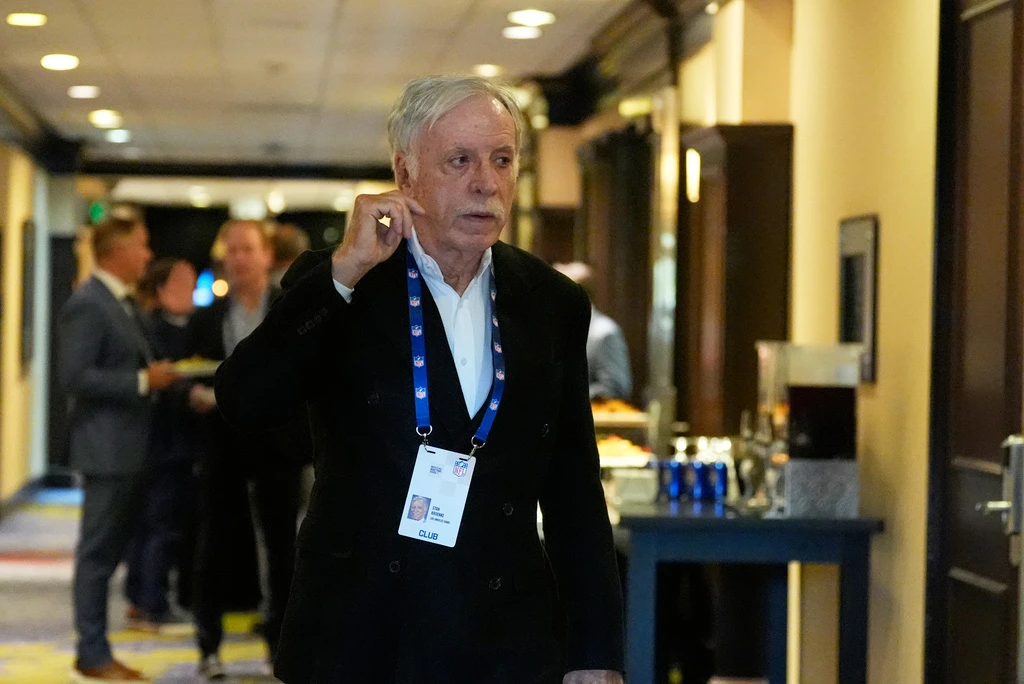
The landscape of Southern California professional sports has shifted dramatically with news that Stan Kroenke, the billionaire owner of the Los Angeles Rams, has agreed to purchase the Los Angeles Angels for a staggering four billion dollars.
This transaction marks the highest valuation ever recorded for a Major League Baseball franchise, surpassing even the recent San Diego Padres sale.
The deal brings an end to Arte Moreno’s tumultuous 23-year tenure as the team’s owner, a period that began with championship glory but descended into what has become baseball’s longest active playoff drought.
For Angels fans who have endured more than a decade of disappointment despite watching generational talents like Mike Trout and Shohei Ohtani wear their uniform, this ownership change represents something far more significant than a simple business transaction.
The acquisition signals a potential turning point for a franchise that has struggled to translate star power into postseason success, and it expands Kroenke’s already impressive sports empire into yet another major league.
The $4 Billion Question Everyone’s Asking (But the Answer Isn’t What You Think)
When news broke that Stan Kroenke had agreed to purchase the Angels for four billion dollars, the immediate reaction centered on the eye-popping price tag. This valuation represents a significant premium over the 2.8 billion dollar figure that Forbes had assigned to the franchise just months earlier, raising eyebrows throughout the baseball world. The previous record for a baseball team sale had been set only weeks before when the San Diego Padres changed hands for 3.9 billion dollars.
However, the real story behind this astronomical figure has less to do with the Angels’ current performance and everything to do with their untapped potential. Orange County represents a market of more than three million people, a wealthy demographic that has remained largely underserved despite the region’s passion for baseball. The franchise sits in one of the most valuable media markets in the country, yet has failed to capitalize on this advantage during years of organizational dysfunction.
Kroenke’s willingness to pay such a premium suggests he sees what others might miss when looking at a team that has finished last in its division for consecutive seasons. The transaction runs through Kroenke Sports and Entertainment, his holding company that has demonstrated a consistent ability to transform struggling franchises into championship contenders. The deal remains subject to customary closing conditions and Major League Baseball approval, with expectations pointing toward completion in the first quarter of next year.
What makes this purchase particularly intriguing is how it fits into Kroenke’s broader vision for Southern California sports dominance. The 79-year-old real estate developer has already revolutionized Inglewood through his construction of SoFi Stadium and the sprawling Hollywood Park development, creating a year-round entertainment destination that will showcase Olympic events in 2028. Now he’s extending that footprint into Orange County, establishing a presence that spans the entire Southern California sports calendar.
What Arte Moreno’s Controversial Fan Survey Really Revealed—And Why It Changed Everything
Arte Moreno’s tenure as Angels owner began with tremendous promise when he became Major League Baseball’s first Latino owner in 2003, taking control of a franchise fresh off its only World Series championship, a 2002 title chronicled by MLB.com. He built a reputation as a fan-friendly owner who prioritized keeping baseball affordable, and the team’s early success seemed to validate his approach. Between 2004 and 2009, the Angels captured five American League West titles (in 2004, 2005, 2007, 2008, and 2009, according to Britannica) and made two Championship Series appearances.
However, the relationship between Moreno and the fanbase deteriorated dramatically over the following years as the team’s performance collapsed despite massive investments in star players. The breaking point came in February when Moreno told the Orange County Register that according to Angels survey results, winning was not a top-five priority for fans. According to Moreno, the data showed supporters valued affordability, safety, and a good experience above competitive success.
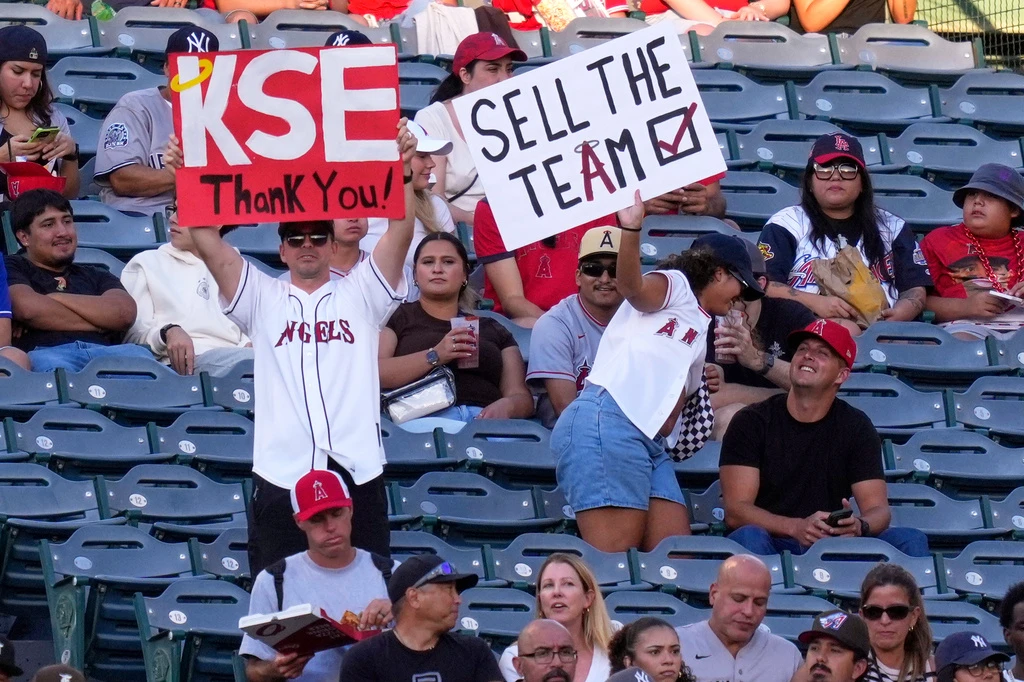
The remarks ignited a firestorm of criticism from a fanbase that had watched their team employ generational talents like Shohei Ohtani and Mike Trout without winning a single playoff game. They’re not doing much for us fans. It seems like every other team is just doing a lot more than us, despite us having a huge following [and] having some of the best players to ever play the game. I mean, it’s just like a lack of commitment, to say the least. “Johnny Gonzalez“, joining the nationwide movement where supporters would gather in specific sections, remove their shirts, wave them overhead, and chant demands for ownership change. The frustration reached a boiling point as the Angels continued their downward spiral.
Moreno had previously attempted to sell the franchise in August 2022, only to reverse course five months later after apparently failing to find a buyer willing to meet his asking price.
In a 2023 interview, he explained his decision to remain by stating he needed to commit to doing better, acknowledging the organization was not performing well enough. That commitment, however, never materialized into the kind of sustained success that fans desperately wanted to see from their struggling franchise.
The Kroenke Formula: How One Billionaire Turns Losing Franchises Into Champions (Angels Fans Should Pay Attention)
Stan Kroenke’s track record as a sports owner provides genuine reason for optimism among Angels supporters who have endured years of disappointment.
Through Kroenke Sports and Entertainment, he has assembled an empire spanning six leagues across two continents, and his teams have consistently found championship success under his stewardship. The Los Angeles Rams have captured two Super Bowl titles during his ownership, including a dramatic home-field victory at SoFi Stadium in 2022.
The pattern extends beyond football to virtually every sport in his portfolio. The Denver Nuggets claimed an NBA Championship, while the Colorado Avalanche have hoisted the Stanley Cup twice under his ownership.
Even the Colorado Rapids won an MLS Cup, and the Colorado Mammoth secured two National Lacrosse League Championships. His European holdings have proven equally successful, with Arsenal winning the Premier League in the 2025-2026 season and Arsenal Women’s Football Club capturing the UEFA Women’s Champions League.
What distinguishes Kroenke from many other sports owners is his willingness to invest whatever resources prove necessary to build winning organizations. He funded the Rams’ controversial but ultimately successful relocation to Los Angeles, then supported the roster moves that brought a championship to the newly constructed SoFi Stadium. Currently, the Rams are pursuing another home-field Super Bowl victory, having convinced future Hall of Famer Aaron Donald to come out of retirement to strengthen their championship pursuit.
This commitment to excellence extends beyond player acquisitions to infrastructure development and organizational culture. Kroenke’s construction of SoFi Stadium and the surrounding Hollywood Park development has fundamentally transformed Inglewood, creating an entertainment destination that generates year-round revenue and community engagement.
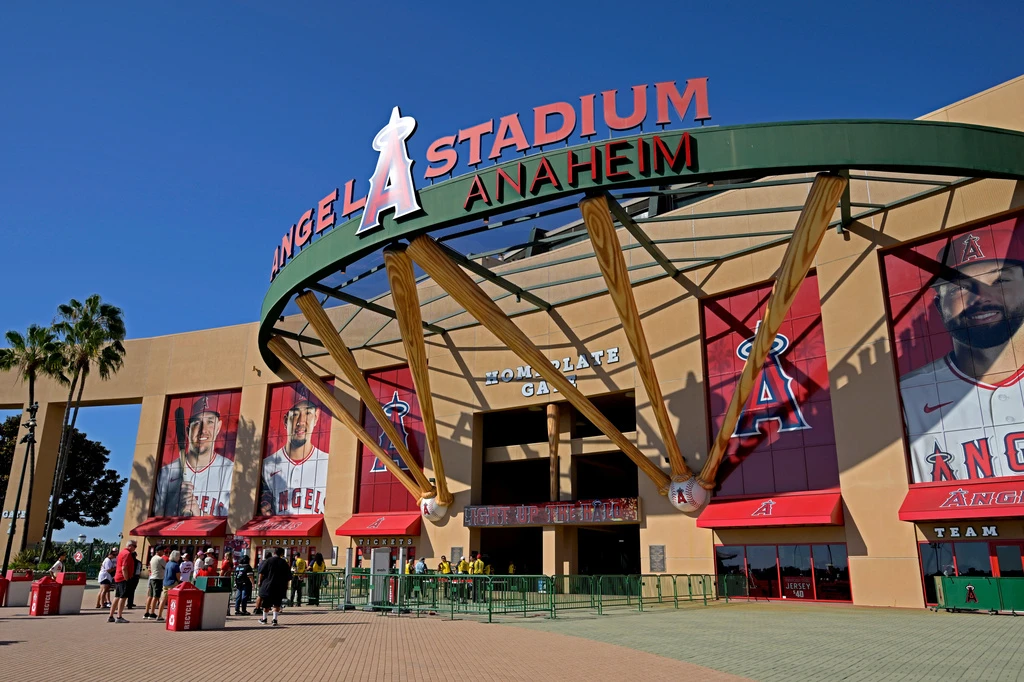
Angels fans hoping for similar revitalization around Angel Stadium in Anaheim have legitimate reasons to believe such investment could be forthcoming under new ownership that has demonstrated this pattern repeatedly across multiple franchises and sports.
The Southern California Sports Empire That’s Quietly Being Rebuilt Right Now
The Angels acquisition represents just one piece of a dramatic reshuffling of Southern California sports ownership that has accelerated throughout this year. Bob Iger and Joshua Kushner agreed to purchase the majority stake of the Lakers from Mark Walter in August for a record-breaking 12.5 billion dollar valuation, though that deal faces complications from Jeanie Buss’s legal challenge to her siblings’ effort to sell their minority stake. The dispute threatens to end 47 years of Buss family control over one of basketball’s most iconic franchises.
Mark Walter’s situation adds another layer of intrigue to the regional ownership landscape. His businesses face multiple investigations, and the Dodgers owner is working to pay down significant debt carried by two of his insurance companies.
While Walter’s holding company and Dodgers president Stan Kasten have insisted his other sports properties remain off the market, reports suggest Walter has been open to selling his stake in Premier League team Chelsea. Questions persist about whether financial pressures might eventually force him to divest other holdings, including the WNBA’s Sparks.
Kroenke’s expansion into baseball ownership positions him as perhaps the most powerful sports figure in Southern California, with year-round presence across the region’s sports calendar. His control of the Rams already made him a central figure in Los Angeles sports, but adding the Angels extends his influence into Orange County’s substantial market. The combination of SoFi Stadium in Inglewood and Angel Stadium in Anaheim gives Kroenke Sports and Entertainment unparalleled reach across the entire Southern California region.
This consolidation of sports ownership under fewer but more financially powerful individuals represents a significant shift in how professional franchises operate within major metropolitan areas. Kroenke’s proven ability to leverage his various properties for mutual benefit suggests the Angels could see advantages from being part of a larger sports and entertainment ecosystem. The synergies between his football and baseball operations, combined with his real estate development expertise, could unlock value that has remained dormant during years of underperformance under previous ownership.
What Happens Next Will Determine If This Record-Breaking Deal Saves or Sinks the Angels
The immediate future holds both promise and uncertainty for the Angels organization as it transitions to new ownership.
The sale must still clear Major League Baseball approval and satisfy customary closing conditions before finalizing in early 2027, leaving the franchise in a state of limbo during the interim period. Recent organizational changes under Moreno’s final months suggest some groundwork has already been laid for a potential turnaround, though the extent of that progress remains unclear.
Moreno fired general manager Perry Minasian in June and brought in longtime baseball executive John Mozeliak as interim general manager. Mozeliak immediately shifted the team’s draft philosophy from selecting players closest to major league readiness to simply choosing the best available talent, a fundamental change in organizational approach. He also traded roughly one-third of the major league roster to inject prospects into a minor league system that had been depleted through years of mismanagement, while firing three coaches and restructuring the front office.
These moves represent the kind of painful but necessary rebuilding that successful franchises undertake when acknowledging their competitive window has closed. However, the Angels face challenges that extend beyond roster construction, with the team having appeared in just 104 games this season as they flirt with the worst record in baseball.
The franchise has extended its playoff drought to 11 seasons, the longest active streak in Major League Baseball. A potential labor lockout looms next season as players and owners remain far apart on a new collective bargaining agreement, which could complicate any transition plans.
Yet Kroenke’s purchase is widely viewed as the most likely catalyst to finally transform the Angels’ fortunes, triggering reactions ranging from shock to celebration among fans who have endured more than a decade of disappointment. His history of investing in infrastructure, supporting front office decisions, and building sustainable winning cultures across multiple sports provides a template that could work in Anaheim.
Whether this four billion dollar gamble pays off will depend on execution during the critical early years of new ownership, but the pieces appear to be in place for a genuine organizational renaissance that could finally deliver the success that has eluded this franchise for far too long.