The Unique Blend: American Soccer’s Ultra Culture
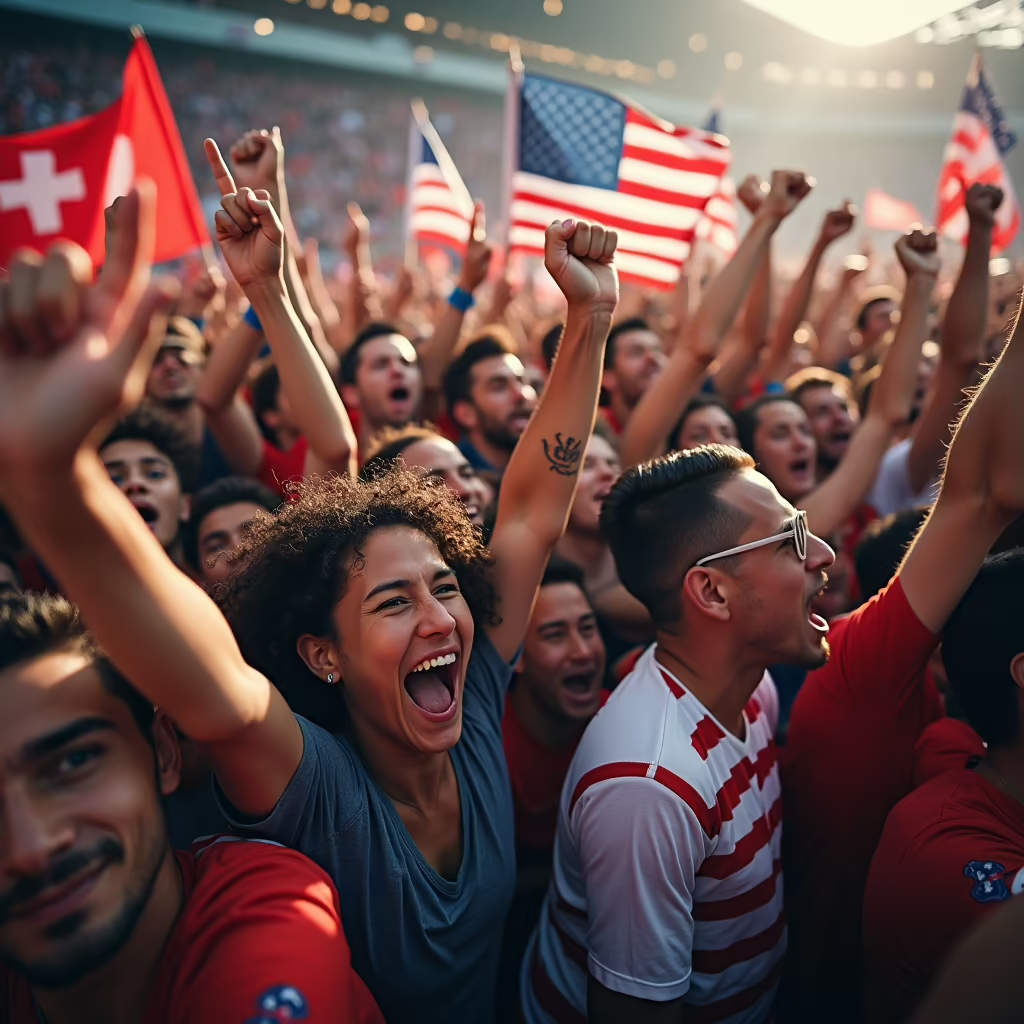
American soccer fandom has developed into something genuinely its own — a culture that draws from European ultra traditions while reflecting the social values, demographics, and political realities of the United States. What’s emerged over the past two decades is neither a carbon copy of the Old World nor a sanitized stadium experience. It’s a third thing entirely, and it’s worth understanding on its own terms.
Transatlantic Exchanges: Learning from the Legends
The American soccer ultra scene — organized supporter groups defined by active, vocal, and often choreographed backing of their clubs — represents one of the more fascinating cultural developments in U.S. sports.
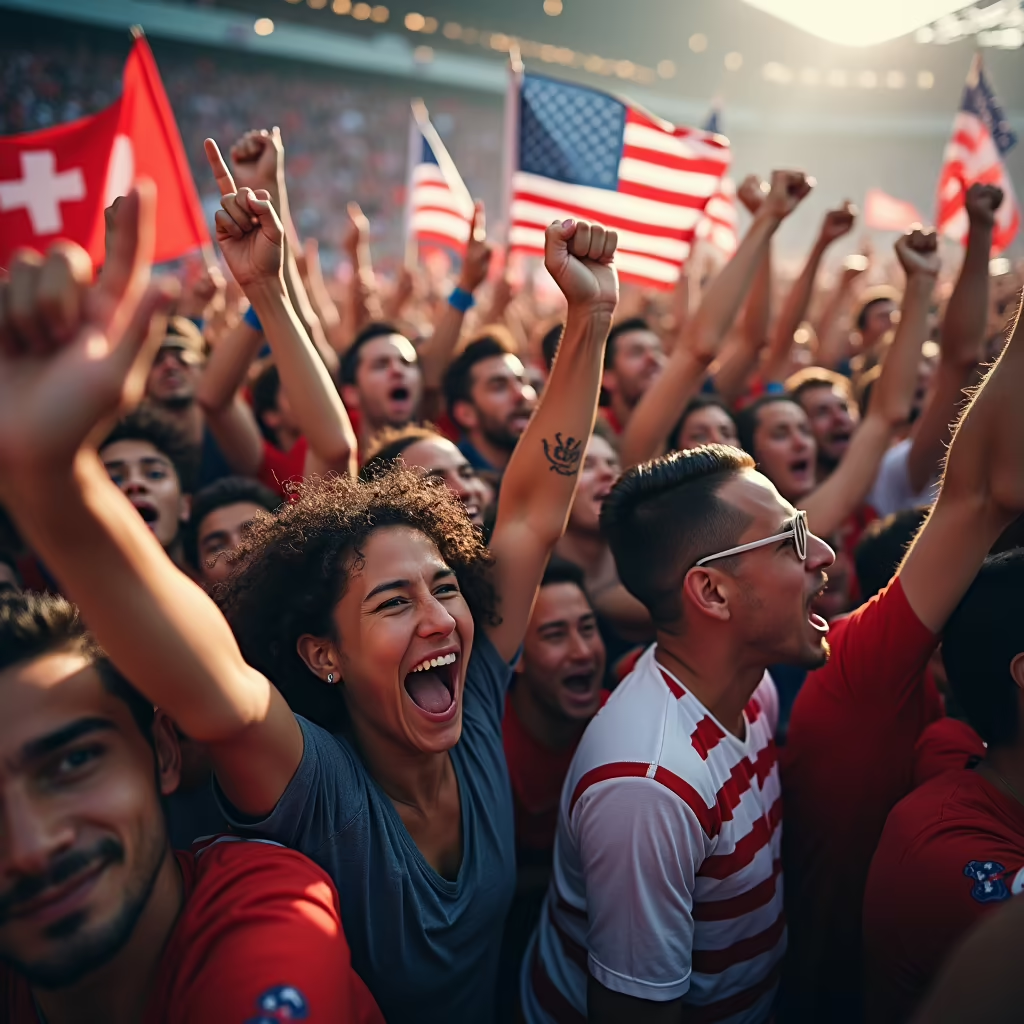
Unlike the passive, sit-down spectatorship that defines most American professional sports environments, ultra culture demands participation.
Tifos, coordinated chants, drums, and standing sections have become fixtures at MLS stadiums from Portland to Atlanta. What makes the American version distinct is how it has absorbed European influence without simply replicating it.
Groups have taken the structural DNA of Italian curva culture, German supporter traditions, and South American barra brava energy, then filtered it through a uniquely American lens — one shaped by progressive politics, community organizing, and a sport still fighting for mainstream legitimacy in a crowded market.

Progressives on the Terraces: A Distinct Identity
The transatlantic exchange between American and European ultra culture is real and ongoing.
American supporter groups have studied the mechanics of Europe’s most iconic fan sections — Borussia Dortmund’s Südtribüne, known globally as the Yellow Wall, regularly draws over 25,000 standing supporters and is described by Borussia Dortmund as the largest standing terrace in Europe and is widely regarded as the most atmospheric single stand in club football.
Groups like the Timbers Army in Portland and the Emerald City Supporters in Seattle have made deliberate efforts to understand how European groups build identity, sustain membership, and create visual spectacle.
But the influence doesn’t flow in only one direction. European clubs and supporter groups have taken note of American tifo production, which has grown increasingly ambitious in scale and execution.
The 2016 MLS Cup tifo displays, for instance, drew international attention for their visual complexity. American ultras are not passive students of European tradition — they are active contributors to a global conversation about what supporter culture can look like.
Clashes and Controversies: Navigating League Rules
Perhaps the most defining characteristic separating American ultra culture from its European counterpart is its explicit commitment to progressive social values.
In many European countries, ultra groups have historically been associated with far-right politics, racism, and homophobia — a documented problem in leagues across Italy, Eastern Europe, and beyond. American supporter groups have largely moved in the opposite direction.
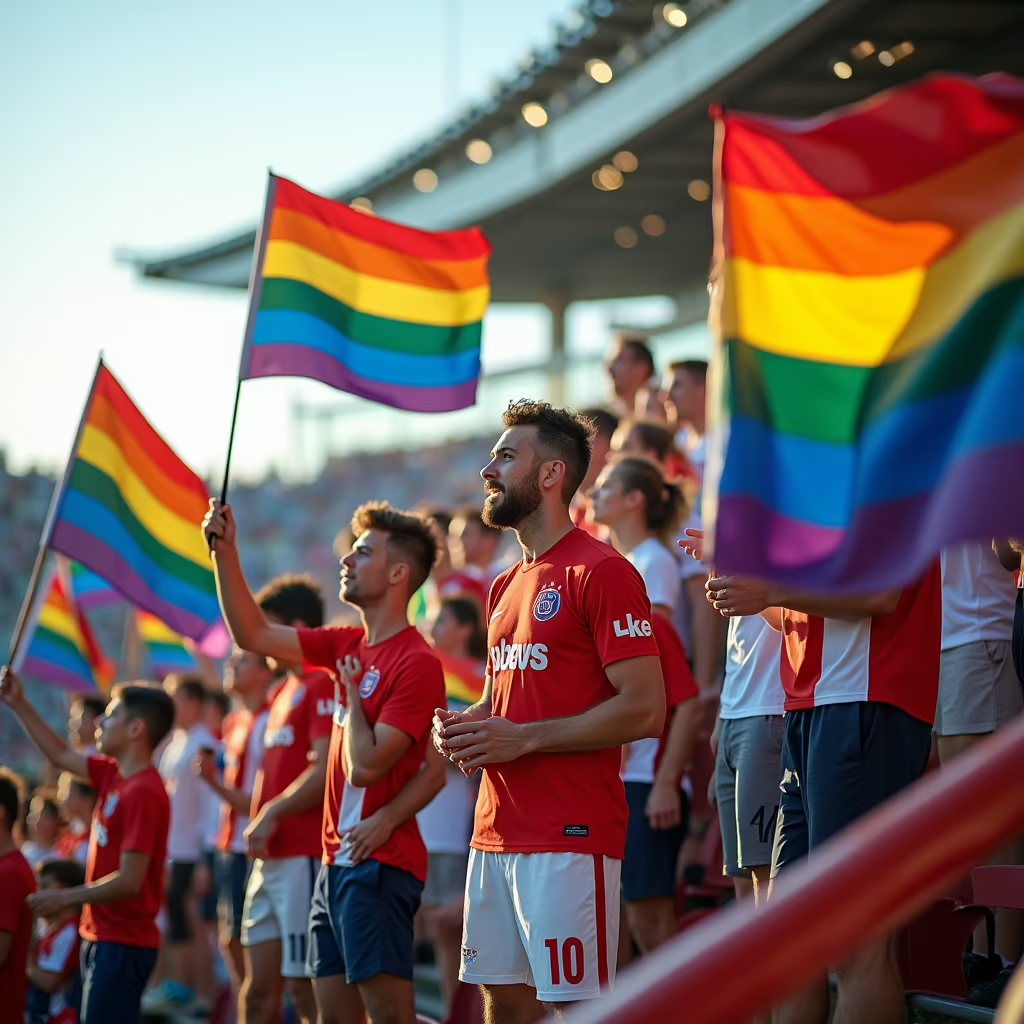
Rainbow flags are standard in sections like Atlanta United’s Footie Mob and the LA Galaxy’s Angel City Brigade. Female capos — the individuals who lead chants and direct crowd participation — are increasingly common. Groups openly advocate for LGBTQ+ inclusion, racial equity, and environmental causes, often coordinating with local nonprofits and community organizations.
This isn’t performative branding; it reflects the demographic reality of American soccer’s fanbase, which skews younger, more diverse, and more urban than the audiences for the NFL or MLB.
The Future of Fandom: A Growing Force to Reckon With
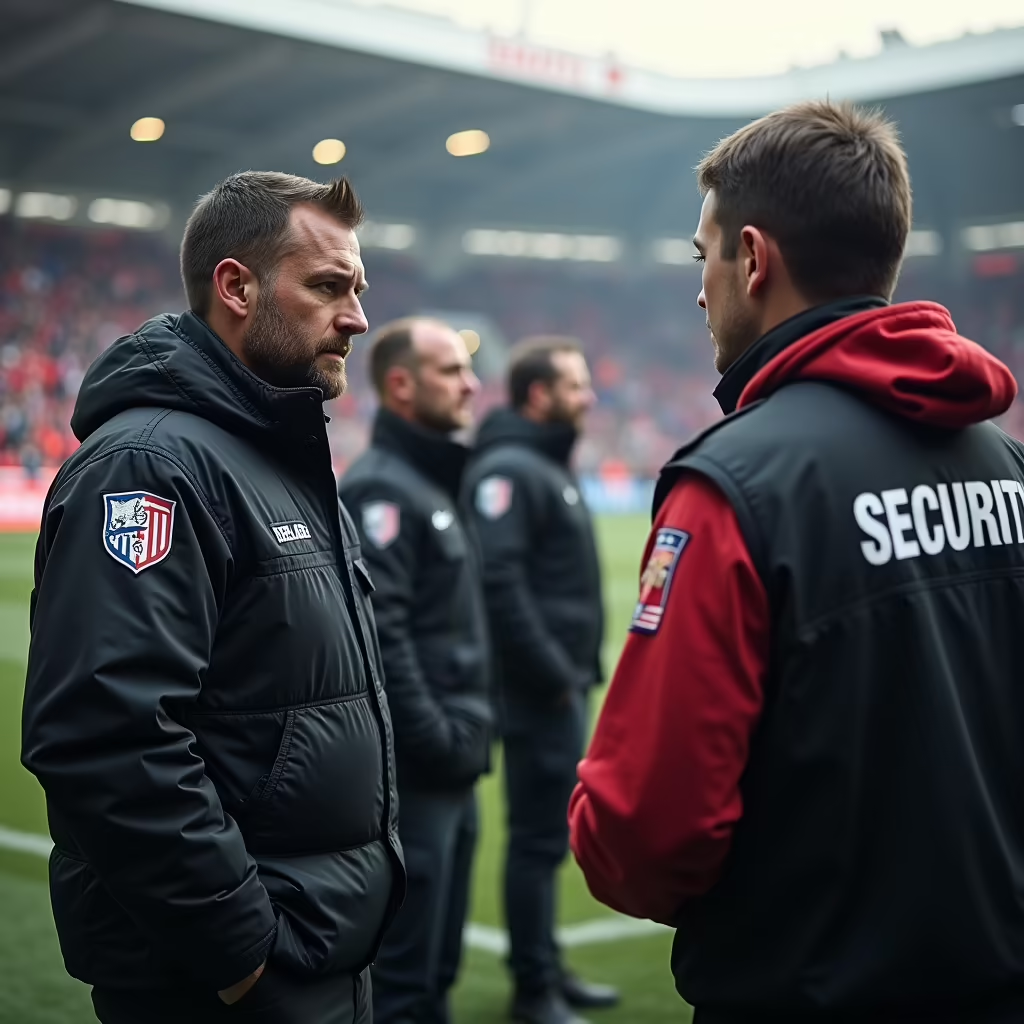
That progressive identity exists in constant tension with the institutional framework of Major League Soccer, which operates under some of the strictest supporter conduct regulations in professional soccer globally.
Pyrotechnics — a staple of European and South American ultra culture — are banned outright at MLS venues.
Political banners, certain flags, and even some forms of choreography have been restricted or prohibited depending on the club and stadium.
The consequences have been real, Portland Timbers supporter groups have faced sanctions over banner content.
Toronto FC’s Inebriatti and New Jersey’s Garden State Ultras have both navigated disciplinary processes tied to supporter conduct policies.
The friction between organized fan groups and league governance is not unique to MLS — UEFA has its own long-running battles with ultra culture across Europe — but in the American context, it carries an added layer of complexity given how recently the sport has established itself at the professional level.
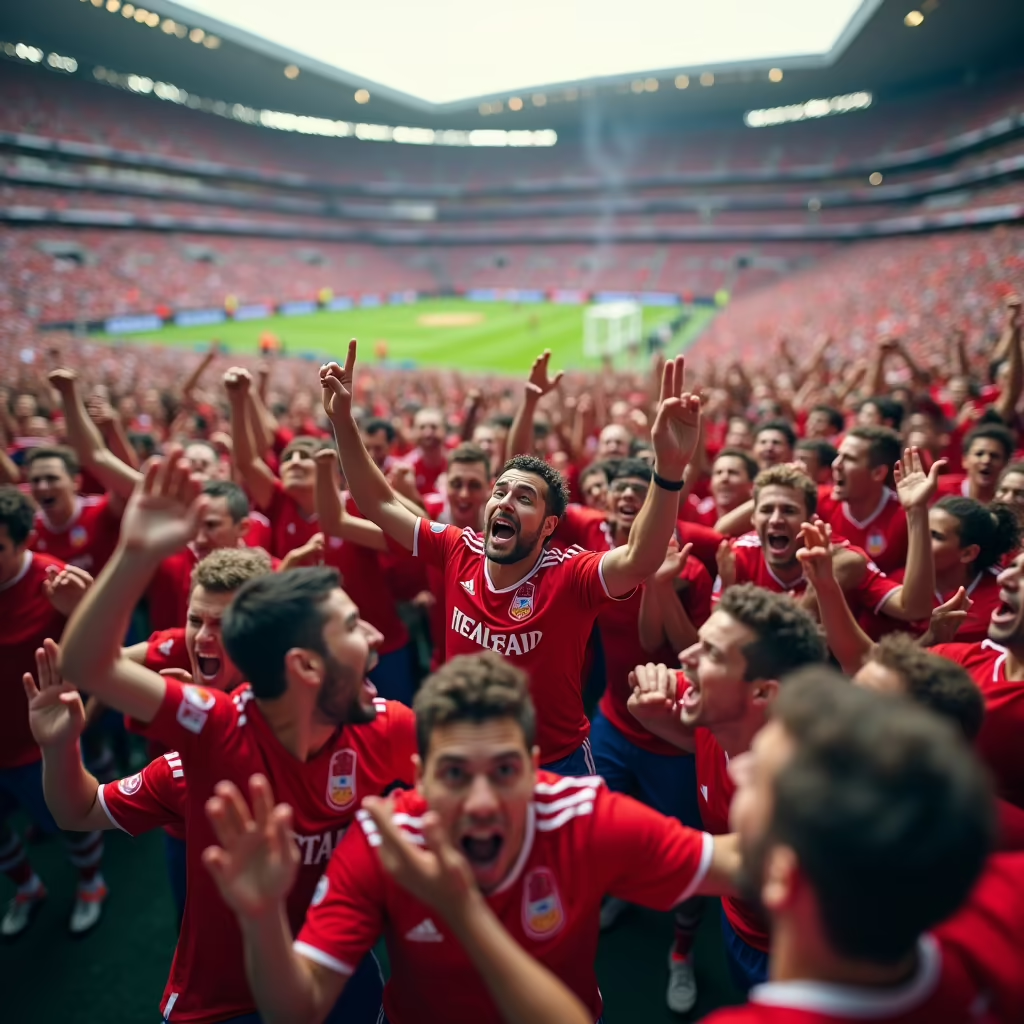
Despite the regulatory friction, the American ultra scene continues to expand. Platforms like Ultras Base USA catalog the growing number of organized supporter groups across MLS, USL, and lower-division leagues, reflecting a movement that has spread well beyond the sport’s traditional coastal strongholds.
Cities like Cincinnati, Nashville, and St. Louis — markets that joined MLS relatively recently — have developed supporter cultures that rival those of the league’s founding clubs in intensity and organization.
FC Cincinnati’s supporter groups, for example, helped drive some of the highest average attendance figures in MLS during the club’s early seasons, demonstrating that ultra culture is not just a coastal or legacy-market phenomenon.
What the American ultra scene ultimately represents is a living argument that fan culture is not fixed — it evolves in response to its environment.
American ultras have taken a European framework, stripped out its most exclusionary elements, and rebuilt it around community, identity, and belonging. The result is something that doesn’t look exactly like anything else in global soccer, and that’s precisely what makes it worth watching.
The financial and structural growth of MLS has also shaped how ultra culture develops in the United States.
As the league has expanded — now at 29 clubs with more franchises in the pipeline — the commercial pressures on supporter culture have intensified. Designated Player salaries, expansion fees that have climbed past $300 million for recent markets, and broadcast deals with Apple TV+ have all signaled that MLS is operating at a different economic level than it was a decade ago. For ultra groups, that growth is a double-edged development.
More resources and larger stadiums create more opportunity for spectacle and visibility. But commercialization also brings tighter corporate oversight, more restrictive venue policies, and a tension between the grassroots identity of supporter culture and the polished product leagues want to present to broadcast audiences. How American ultras navigate that tension over the next decade will define whether the culture deepens or gets absorbed into the broader entertainment product.
What’s clear is that American soccer ultra culture has moved past the point of being a novelty or an imitation. It has produced its own traditions, its own internal debates, and its own generational continuity.
Young fans who grew up watching the Timbers Army or the Supporter’s Shield-chasing seasons of the Seattle Sounders are now the ones leading chants and organizing tifos. The culture is self-replicating, which is the clearest sign that it has taken root. Whether MLS and its clubs choose to protect and nurture that culture — or continue to regulate it into something more manageable — remains one of the more consequential questions in American soccer’s ongoing development.