
Mike Trout was supposed to be baseball’s next Derek Jeter—a generational talent destined to dominate the sport for decades. Three MVP awards, 11 All-Star selections, and 9 Silver Sluggers established him unquestionably as the best player of his era.
Yet somehow, the athlete who should be everywhere is now almost impossible to find in mainstream conversation. Jersey sales have plummeted dramatically, and for the first time in his career, fans didn’t even vote him as an All-Star starter—a shock that reverberated through baseball. The Angels’ cornerstone player, locked into a 12-year, $426.5 million deal through 2030, has experienced an unprecedented fade from the spotlight despite possessing the skills that once defined elite excellence.
What happened to the phenomenon destined for eternal stardom? The answer lies in a perfect storm of circumstances that have conspired to keep one of baseball’s greatest talents trapped in a cycle of disappointment and invisibility.

Want to know what people are really saying? Don’t miss the buzz from Reddit at the end!
The Injury Curse That Won’t Let Go
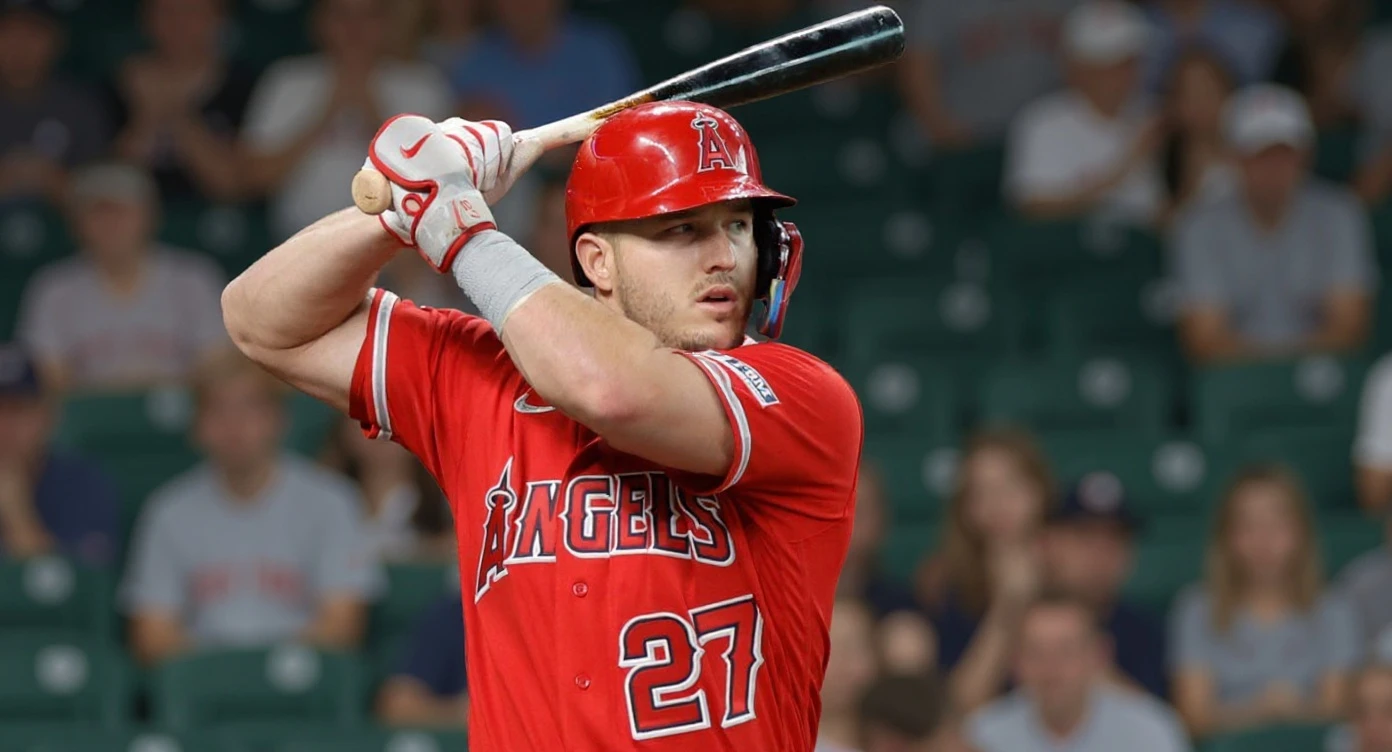
It started quietly with whispers about a knee injury. Then came another. And another. Over recent seasons, Trout has battled recurring physical setbacks that forced extended absences from the game he once dominated. Most critically, he was recently placed on the 10-day injured list with a bone bruise in his left knee after jamming it while sprinting to first base—a disturbingly cyclical pattern.
Exactly one year prior, he’d suffered a torn meniscus in that same left knee, ending his entire 2024 season. The identical knee suffering fresh trauma despite prior surgery underscores a troubling structural weakness. His 2025 numbers tell the story: 106 hits, 26 home runs, a .232 batting average, and 1.5 WAR—starkly contrasting with his career .294 average and 87.5 WAR.
These aren’t minor inconveniences—they’re the kind of injuries that fundamentally reshape careers and raise uncomfortable questions about durability. Each return brings hope he’ll reclaim his throne. Each new injury dims it considerably. The frequency and severity suggest something far deeper than random misfortune—a systemic vulnerability that may define his remaining years.
A Loyal Angel in a Sinking Ship
While other superstars constantly demand trades to contenders, Trout remained remarkably loyal to the Los Angeles Angels. But loyalty in professional sports carries a steep price. The Angels haven’t made the playoffs since 2014—baseball’s longest active drought.
In 65 seasons, they’ve compiled a .495 winning percentage with only one World Championship and one pennant, reflecting chronic organizational dysfunction that extends far beyond any single player. Year after relentless year, Trout carried a perpetually underperforming roster that couldn’t quite get over the hump.
The 2025 season was no different: 72-90 record, fifth place in the AL West. He’s watched potential teammates come and go, championship windows close before fully opening, and continued showing up day after day. His devotion once felt admirable and inspiring; now it feels tragically misplaced and almost painful to observe.
The disparity between his individual excellence and team mediocrity has only widened, making every season feel like another lost opportunity. In a career where he could have orchestrated his own path to contention, Trout’s choice to remain represents both unwavering commitment and a poignant reminder of misaligned ambitions.
The Unexpected Plot Twist: Trout’s Return to the Outfield
Just when it seemed Trout’s best days were behind him, there’s surprising movement and strategic repositioning. Before the 2025 season, a tactical decision was made born from recurring left knee complications.
This positional adjustment represents a fascinating chapter in his career’s ongoing narrative of adaptation and resilience. The Angels had explored similar repositioning before. Back in March 2022, manager Joe Maddon proposed moving Trout from center field to a corner outfield spot to prevent injuries, with Brandon Marsh potentially taking over center field duties.
However, when Trout expressed a strong preference to remain in center field, Maddon honored that request the following day. This time, organizational circumstances have apparently shifted the calculus, as the team continues building with emerging talent.
The transition signals something genuinely important about his trajectory: either a bold statement of renewed competitive fire born from hard-won wisdom, or a pragmatic acknowledgment that full recovery may require strategic compromises. It represents both hope and realistic adaptation—a calculated gamble on sustainability that acknowledges both his remaining talent and persistent physical constraints.
The WBC Captain’s Absence: From Leadership to Sideliner
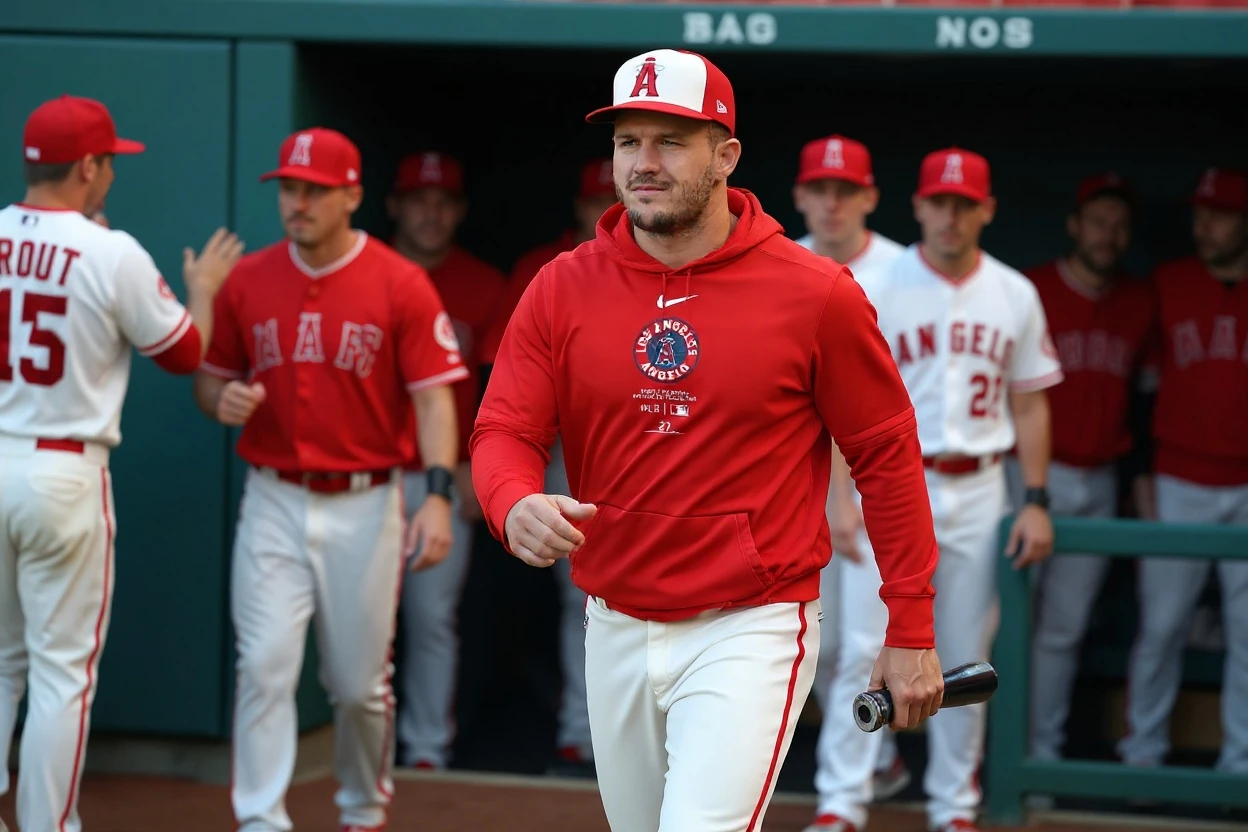
Trout announced he won’t participate in the upcoming World Baseball Classic, citing insurance complications—a detail that stings far more profoundly than it initially appears. The contrast with his recent WBC history makes this absence particularly poignant.
Just three years earlier, he announced he would captain the United States national baseball team in the 2023 World Baseball Classic, an extraordinary honor reflecting his stature and leadership. He led Team USA to the tournament final, and despite the heartbreaking runner-up finish, showcased his crucial importance to the national squad.
He was even named to the All-WBC team. Missing this opportunity isn’t simply about one tournament; it’s another powerful symbol of how obstacles now follow Trout everywhere. Notably, his insurance predicament isn’t isolated.
Francisco Lindor, Carlos Correa, and Javier Báez similarly couldn’t participate in the 2026 WBC due to insurance-related barriers, despite federation efforts to resolve coverage issues. For some players, insurers declined coverage regardless of recent health status, demonstrating how contract insurance requirements have become structural gatekeepers in international baseball participation. From celebrated captain to sidelined spectator—Trout’s WBC trajectory encapsulates the broader tragedy of his circumstances.
Can the Angels’ Star Reclaim His Legacy Before Time Runs Out?
Despite the Angels’ devastating playoff drought and mounting frustrations, Trout maintains genuine optimism about the team’s prospects. There’s theoretically still time to rewrite this increasingly complicated narrative. A genuinely healthy season, a position change that successfully reignites his former dominance, or a surprise playoff run—any of these could remind the baseball world why he was once considered the sport’s chosen one.
The Angels have begun investing in organizational development with recent roster acquisitions and emerging talent like outfielder Jo Adell, who contributed 37 home runs during 2025. But time remains a luxury that professional athletes rarely possess in abundance, especially when battling recurring injuries to the same anatomical structures.
The overarching question isn’t whether Trout remains talented enough to dominate; it’s whether his surgically repaired left knee will finally grant him the extended, healthy, productive, winning season he genuinely deserves after years of heartbreak and setbacks. For a player of his caliber and the remaining years on his $426.5 million contract, the window may not close immediately, but with each passing season constrained by injury, the stakes grow higher and the margin for error considerably smaller.
Public Sentiment: Skepticism, Hope, and Lingering Concerns
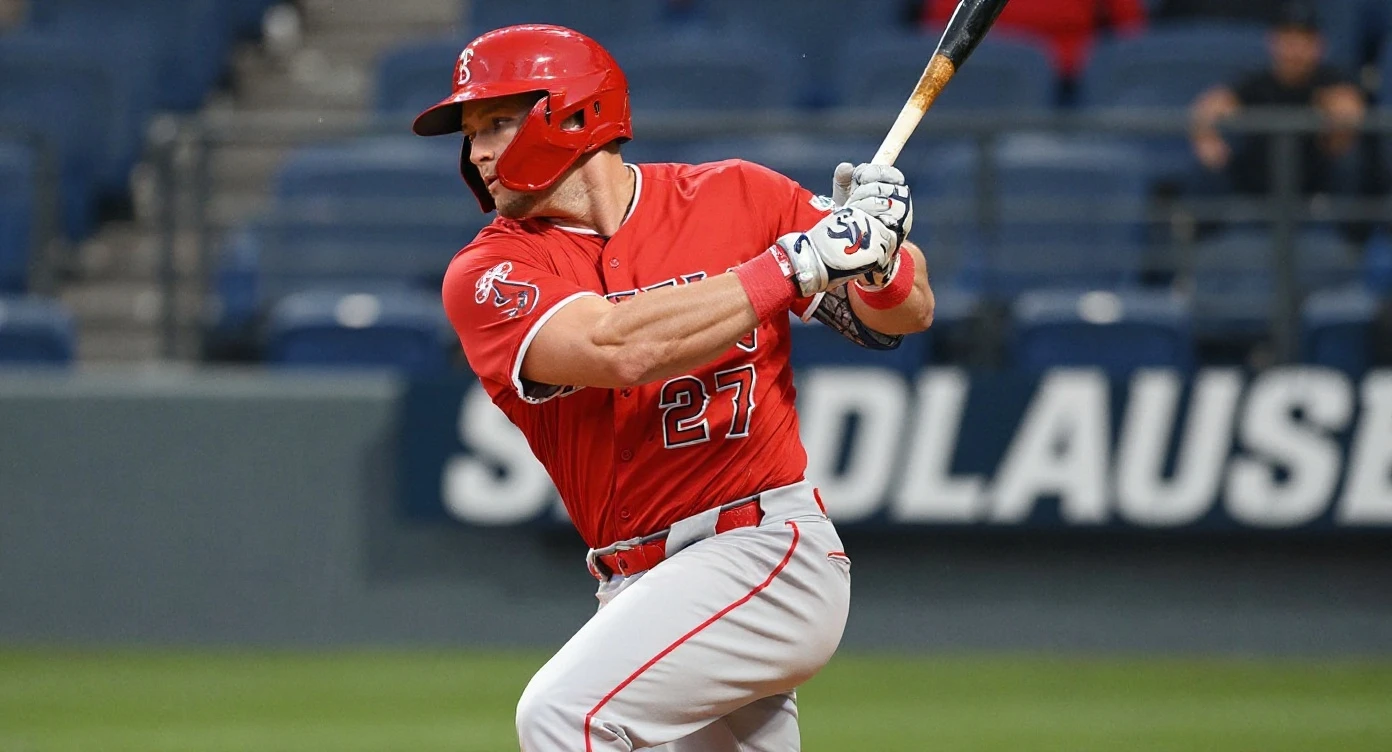
The baseball community’s reaction to Trout’s repositioning and ongoing struggles reflects a complex mixture of emotions—genuine concern for his wellbeing paired with deep skepticism about whether tactical adjustments alone can reverse his trajectory. Many observers have begun scrutinizing the underlying factors behind his repeated injuries, pointing to physical conditioning and workload management as potential culprits.
The theory circulates that elite athletes performing at the highest levels—particularly those attempting to combine power production with base-stealing speed while logging 150+ games annually—may face structural limitations that no amount of talent can overcome. The pattern mirrors other accomplished players who’ve battled similar issues, suggesting these aren’t isolated incidents but rather predictable consequences of extreme athletic demands placed on human physiology.
This analytical perspective exists alongside an almost desperate optimism from those who simply want to witness Trout return to form. Many fans express genuine hope that a healthy season is still possible, that the position change represents a meaningful strategic shift rather than merely acknowledging defeat.
There’s recognition that even diminished versions of elite talent retain value, and that statistical improvements—hitting .270 with modest power—would constitute meaningful progress given recent seasons. This hopeful contingent seems willing to accept reduced production levels as a reasonable trade-off for durability and extended participation.
Underlying this mixed sentiment, however, is a pervasive current of pessimism—a battle-hardened realism that expects the worst. Recurring injuries from the same anatomical structure tend to trigger cautious expectations rather than wild optimism. The skepticism isn’t rooted in malice; rather, it reflects the sobering reality that once a specific body part begins failing repeatedly, subsequent injuries often follow despite best intentions and strategic modifications. This camp views the right field transition as a pragmatic acknowledgment that the damage may already be done, and that smaller steps toward survival might be the only realistic path forward. Whether through injury predictions or terse dismissals of the repositioning plan itself, this perspective dominates the conversation—not because fans lack affection for Trout, but because they’ve learned to temper hope with evidence.
What emerges most strikingly from these varied perspectives is recognition that Trout’s situation transcends mere sports narrative—it’s become a meditation on the limits of human excellence under adversarial circumstances.
No player, regardless of talent, can simply wish away structural limitations or prevail through willpower alone. The baseball world watches and waits, suspended between competing narratives: one where strategic adaptation enables rediscovery, and another where mounting evidence suggests the most painful decline imaginable for a generational talent.