
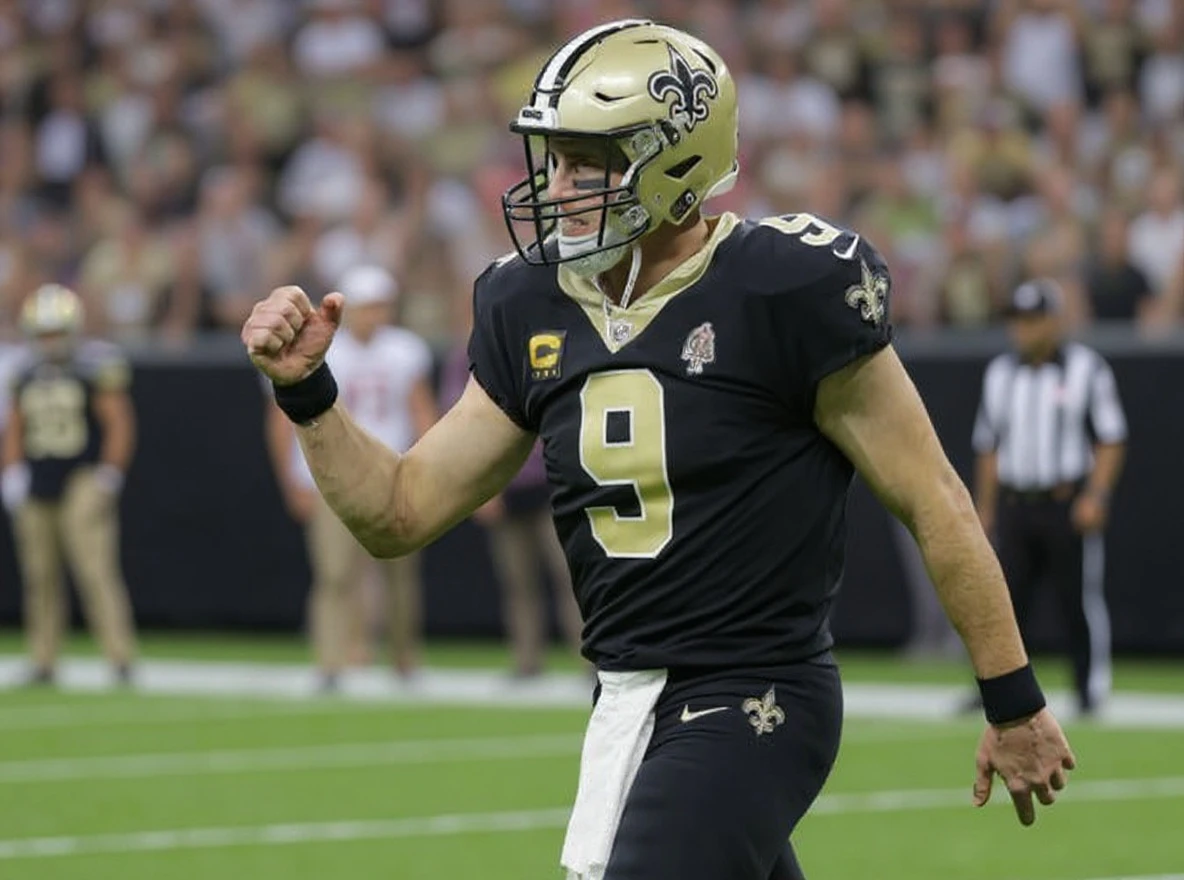
Drew Brees didn’t just lead the New Orleans Saints on the field—he ruled the huddle like a kingdom. In one unforgettable practice during a sweltering Louisiana summer, the Hall of Fame quarterback crossed a line few would dare to cross.
When offensive line coach Doug Marrone stepped into the huddle to criticize struggling rookie Carl Nicks, Brees made a split-second decision that would define his leadership legacy: he grabbed Marrone and threw him out. What followed wasn’t chaos—it was respect.
This moment exemplified a leadership philosophy that transcended traditional coaching hierarchies. Brees understood that the quarterback-coach dynamic required a delicate balance: while coaches maintained the broader team structure, the huddle itself belonged to the player directing traffic on the field.
His willingness to enforce that boundary demonstrated not rebellion against authority, but rather a sophisticated understanding of where accountability should rest.
Why Brees Believed the Huddle Was Sacred Ground
For Drew Brees, the huddle wasn’t just where plays were called—it was his sanctuary. This wasn’t arrogance; it was a calculated philosophy about team dynamics and player protection. Brees understood something most coaches don’t: moments of vulnerability require shelter, not shame.
When Carl Nicks was gasping for breath in the intense heat, he needed support, not public criticism from a coach. The huddle was where weak moments turned into strength, and Brees recognized that protecting his players’ dignity would ultimately strengthen the entire organization.
His philosophy extended beyond mere sentiment; it was rooted in the practical reality that players perform better when they feel secure enough to take risks and learn without fear of public humiliation.
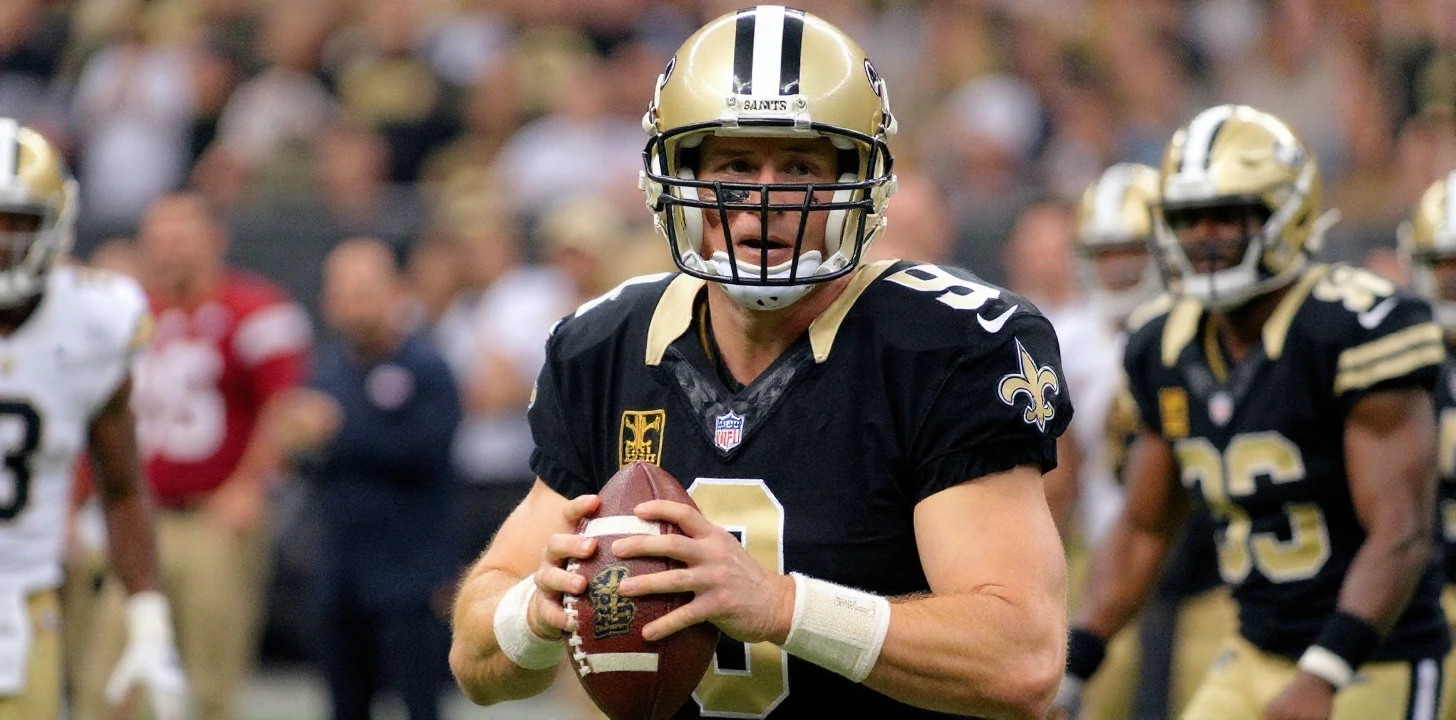
The Rookie Who Learned What Real Leadership Looks Like
Carl Nicks came to the Saints as an unproven rookie, struggling to adapt to the NFL’s demands. But one moment—being defended by his quarterback in the huddle—changed everything. Instead of resenting Brees for the dramatic intervention, Nicks straightened up and formed an unbreakable bond with his leader.
The left guard went on to earn Pro Bowl selections and All-Pro honors over his four seasons in New Orleans, establishing himself as one of the league’s premier offensive linemen. His trajectory from struggling rookie to decorated veteran demonstrated that Brees’ protective gesture wasn’t merely symbolic—it catalyzed genuine professional transformation.
This wasn’t just a coaching moment; it was a masterclass in how one act of genuine protection can unlock a player’s potential and loyalty, transforming a vulnerable moment into a foundation for sustained success.
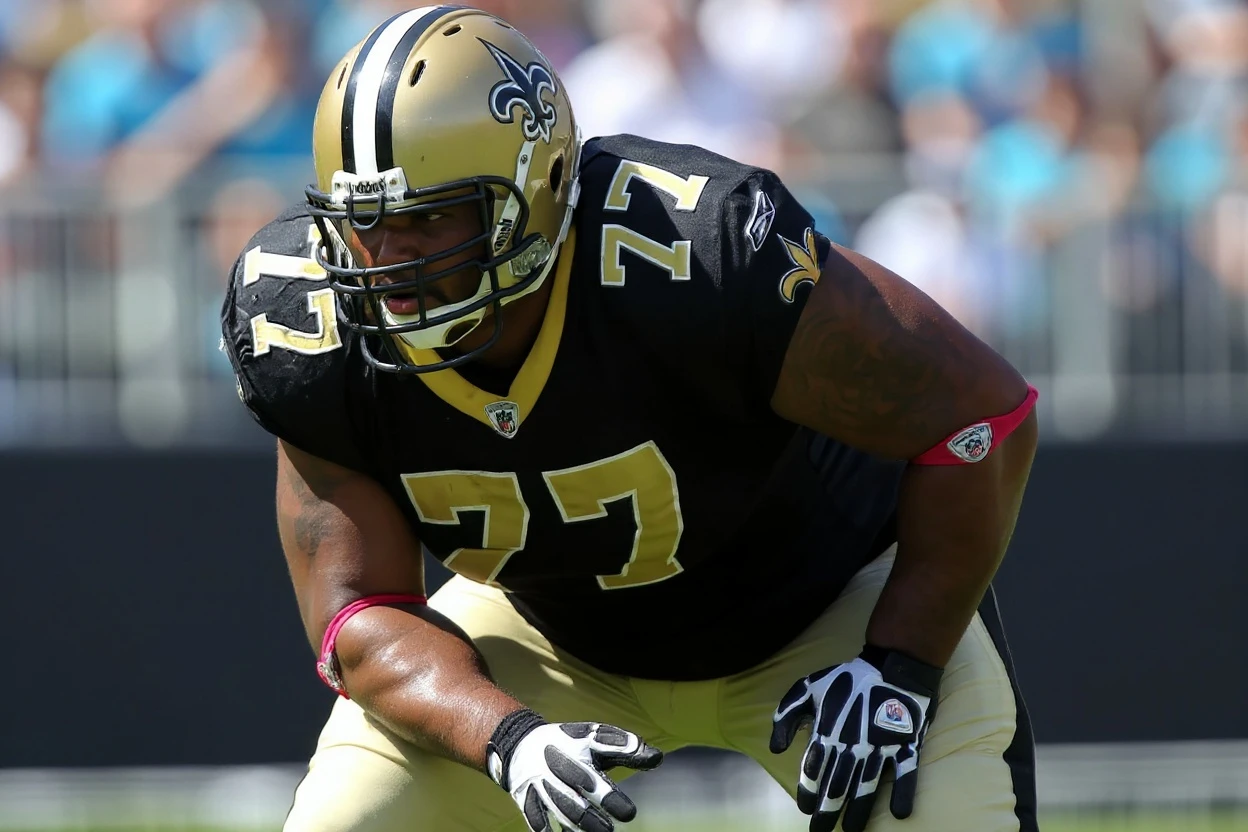
The Brees Effect: How One Moment Rippled Through an Entire Franchise
What happened in that huddle became legendary within the Saints organization. Brees’ willingness to protect his teammates, even at the expense of authority, set a tone that influenced young players long after his retirement.
This unconventional leadership style—one that prioritized player welfare over rigid hierarchy—created a culture where accountability and compassion coexisted. The organizational standards Brees helped establish produced sustained offensive line excellence for years to come.
The lesson wasn’t lost on anyone who witnessed it: true leadership sometimes means breaking the rules to build something stronger than any playbook could create. Brees’ legacy extended beyond statistics and championships; it fundamentally altered how the Saints organization viewed the quarterback’s role—not merely as a tactician, but as a guardian of team culture and player development.

The Guard Tandem That Made It All Possible
While Brees’ leadership moment with Carl Nicks became iconic within the organization, what often gets overlooked is the remarkable partnership that emerged from his investment. Paired alongside Jahri Evans, Nicks formed one of the most formidable guard combinations in football during their prime.
The synergy between these two wasn’t accidental—it was the direct result of creating an environment where players felt empowered to excel. For a quarterback of Brees’ stature, guard play was particularly crucial. Unlike taller signal-callers who could see over the line, Brees depended on elite protection and pocket presence to operate effectively.
The Nicks-Evans duo provided exactly that, functioning as a cohesive unit that allowed the offense to operate at peak efficiency. Their partnership represented more than just technical competence; it was a manifestation of the culture Brees had cultivated through his protective leadership.
Nicks’ trajectory from that transformative moment in the huddle to becoming a Pro Bowl and All-Pro caliber lineman was extraordinary—but it also serves as a cautionary tale about how fragile athletic careers can be. At his peak, Nicks was operating at an elite level, the kind of player who appeared destined for long-term greatness.
Yet circumstances beyond his control threatened to derail everything he had built. The vulnerability of professional athletes, even at the highest levels of performance, reminds us that Brees’ protective instinct in that huddle wasn’t just about building confidence in the moment—it was about recognizing that players needed guardianship both physically and emotionally. The guards who succeed longest are those who feel genuinely supported by their quarterbacks and coaching staff.