
When Kirk Cousins inked his monumental four-year, $180 million contract with the Atlanta Falcons on March 13, 2024, it symbolized hope and renewal for a veteran quarterback seeking fresh opportunities. After years in Minnesota, Cousins believed he’d found the ideal landing spot—an organization ready to build around his experience and leadership.
The contract alone suggested confidence and commitment from ownership, positioning him as the franchise’s centerpiece for a championship push. Yet within months, reality diverged sharply from promise. The quarterback who seemed poised for a successful final chapter found himself caught in a spiral of organizational miscommunication and strategic missteps. What appeared to be a golden opportunity transformed into a cautionary tale about how quickly an NFL partnership can unravel when foundational trust deteriorates.
At thirty-seven, Cousins carried the weight of age-related expectations—a veteran with four Pro Bowl selections and the 2015 PFWA Most Improved Player award—yet the Falcons’ roster construction revealed fundamental contradictions between stated intentions and actual plans, setting the stage for one of the league’s most dramatic reversals of fortune.
Want to know what people are really saying? Don’t miss the buzz from Reddit at the end!
The Blindside: When Draft Day Betrayal Changed Everything
The moment crystallizing Cousins’ disillusionment arrived just months after his signing—when the Falcons selected quarterback Michael Penix Jr. with the eighth overall pick in 2024. The franchise didn’t notify Cousins or his agent until they were on the clock, a stunning breach of protocol that underscored the communication gap between organization and player. Cousins didn’t mince words, claiming he felt ‘a little bit misled.’
This wasn’t merely professional disappointment; it struck at the heart of his decision-making process. Cousins openly acknowledged that knowing about Atlanta’s intentions to draft a quarterback would have fundamentally altered his choice to leave Minnesota. The disconnect revealed something troubling about how the organization communicated with its newly acquired franchise player. The draft pick sent an unmistakable message: despite the massive investment, the organization was already hedging its bets.
For a veteran accustomed to clarity, this perceived duplicity planted seeds of distrust that germinated throughout his tenure. The irony deepened when Penix Jr. subsequently suffered a torn ACL requiring surgery, rendering the contentious pick unavailable during his rookie season—a compounding miscalculation that intensified organizational frustration.
More Than Bad Chemistry: The Offensive System That Couldn’t Adapt
Beyond the psychological damage from organizational priorities, Cousins encountered concrete technical challenges that compounded his struggles. The Falcons’ offensive scheme demanded constant pre-snap motions and shifts—a philosophical departure from the relatively straightforward systems he’d mastered in Minnesota.
This wasn’t simply learning new plays; it represented an entirely different offensive philosophy requiring retraining instincts honed over two decades. During his September 8 debut against Pittsburgh, Cousins completed 16-of-26 passes for 155 yards with one touchdown and two interceptions, indicating immediate execution difficulties. The cognitive load of processing complex motion assignments while maintaining receiver rhythm proved steeper than anticipated. Through his first four games, Cousins averaged just under 220 passing yards—a stark departure from career expectations.
Yet the learning curve showed occasional breakthroughs: in Week 5, he threw for 509 yards, a career-high and Falcons franchise record, surpassing Matt Ryan’s previous 503-yard mark. These flashes proved inconsistent, though. During 2024, Cousins threw sixteen interceptions, leading the league in that category while tying for the league-lead in fumbles—a statistical reality underscoring the mismatch between quarterback and system. Some observers questioned whether the offensive coordinator adequately adapted the scheme to Cousins’ strengths.
A Brief Redemption Arc That Came Too Late
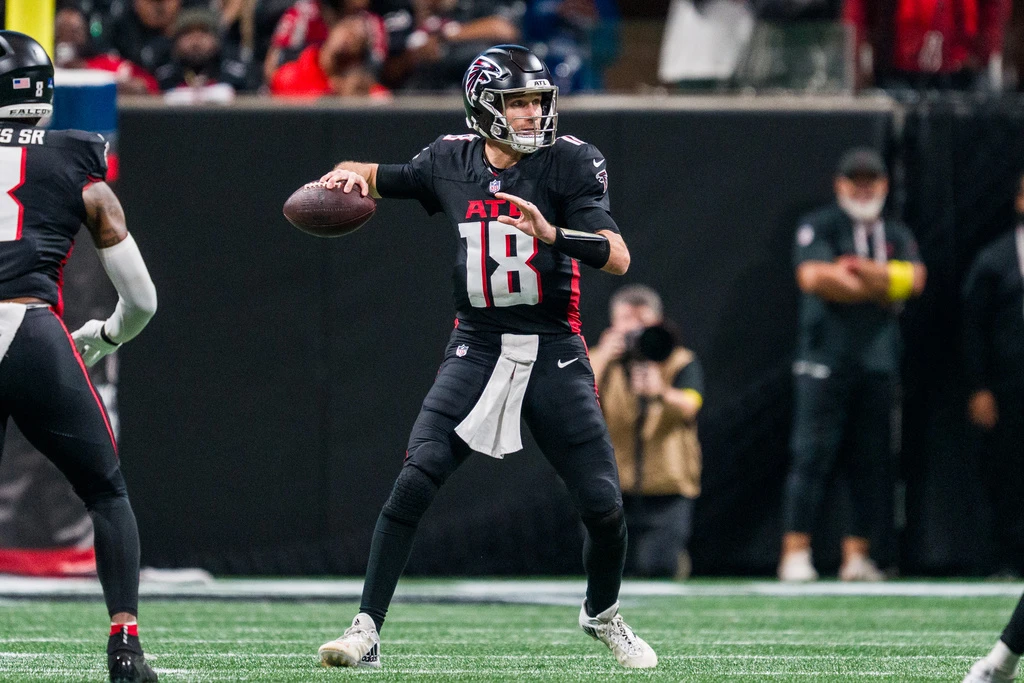
By the 2025 season, signs of Cousins’ adaptation finally emerged, though circumstances forced his hand. Initially named second-string behind Penix, Cousins was thrust into starting duties on November 17 when Penix was placed on injured reserve. Two days later, after Penix received season-ending surgery, Cousins was named the starter for the remainder of the season.
His statistical improvements proved measurable: across ten starts in 2025, Cousins accumulated 1,721 passing yards while maintaining a 61.7% completion percentage, demonstrating meaningful adaptation to the system and productive chemistry with receivers. The dramatic swing in performance—ten touchdowns against only five interceptions through his starting appearances—represented a stark reversal from his tumultuous 2024 campaign.
The Falcons improved to 5-3 with Cousins leading the offense, suggesting he’d finally cracked the system’s complexity and validated the organizational investment. For a moment, the nightmare appeared ready to transform into a comeback narrative. Yet this redemption arrived too late.
The damage inflicted by draft deception, early-season interceptions, and organizational dysfunction had already eroded the partnership’s foundation. Cousins’ improved performance couldn’t resurrect trust that had fundamentally ruptured, nor alter the organization’s shifting strategic direction.
Organizational Overhaul: The Falcons’ Fresh Start Without Cousins
The Falcons’ decision to release Cousins gains additional context through their broader restructuring efforts. The franchise initiated sweeping leadership changes, notably interviewing Matt Ryan—the storied former MVP quarterback and longtime franchise face, whom the team had traded to Indianapolis in March 2022—for a newly created position of president of football operations.
Ryan’s potential appointment represents a philosophical reset, bringing the perspective of a veteran franchise quarterback into executive decision-making. This structural transformation signals that the Falcons recognized fundamental dysfunction at the organizational level, moving to address communication breakdowns and strategic misalignment that plagued Cousins’ tenure.
The organization’s pursuit of new leadership, combined with addressing its quarterback situation through Penix’s uncertain future, suggests the Falcons view the Cousins chapter as symptomatic of broader institutional problems requiring comprehensive solutions. The Falcons’ plan to release veteran quarterback Kirk Cousins before the start of the new league year in March became the final punctuation mark on a contractual relationship restructured in January with that critical decision deadline.
With Penix sidelined by his ACL injury and facing ongoing recovery challenges, the quarterback depth chart remained critically uncertain, making the Cousins release part of a larger rebuilding strategy aimed at restoring credibility and organizational coherence.
What’s Next for a Star QB Caught in Limbo?
At thirty-seven, Kirk Cousins now stands at an unexpected crossroads. Following the Falcons’ announced release before the March league year launch, he contemplates a future that seemed far more certain just two years prior. According to reports, Cousins remains interested in continuing his playing career, yet he’s simultaneously exploring alternative paths—including television opportunities and potential retirement.
This multifaceted deliberation reflects the complex position of aging elite talent suddenly deemed expendable by organizations that previously committed massive resources to them. His career record of 88-77-2 with 298 touchdown passes and 131 interceptions demonstrates sustained excellence, yet the NFL’s ruthless pragmatism means improved 2025 performance offers limited protection when long-term vision changes and organizational leadership transforms dramatically. The emerging quarterback free agent class—which includes Daniel Jones, Malik Willis, and Aaron Rodgers, among others—suggests a competitive market where Cousins must navigate positioning against familiar alternatives.
Some speculate he might attract interest from quarterback-needy teams seeking veteran stability, though finding a landing spot comparable to his Minneapolis tenure appears unlikely. Others suggest his evident communication skills make broadcasting a natural transition. What remains certain is that his Atlanta chapter represents a cautionary narrative about organizational clarity and player-team alignment, reminding observers that even record contracts cannot guarantee success when strategic visions diverge and trust erodes.

The Market for Second Chances: Where Does Cousins Go From Here?
Speculation about Cousins’ next chapter has already begun, with various franchises circling to evaluate whether he might provide stability and veteran experience for their organizations. The quarterback market operates on timing and necessity—teams with glaring roster deficiencies often pivot to proven veterans when draft prospects don’t align with immediate needs.
For Cousins, his record of above-average quarterback play over nearly two decades creates residual value despite his Atlanta disaster. His ability to consistently reach Pro Bowl caliber performance, even when operating within systems that didn’t perfectly suit his strengths, demonstrates a baseline competence that appeals to teams operating under uncertainty. The financial dimension adds complexity to any potential negotiation. Having already earned approximately $322 million across his career, Cousins stands in a unique position—one where salary requirements might flex downward relative to his previous standards.
Teams operating with salary cap constraints might find a veteran willing to accept a prove-it contract more palatable than pursuing mega-contracts for younger signal-callers. This financial flexibility paradoxically stems from his Atlanta misadventure: the failed experiment may have humbled expectations on both sides, creating space for more pragmatic partnership structures than the massive commitments that preceded it. The competitive landscape matters too.
With multiple starting quarterback vacancies likely available in the coming seasons, Cousins enters free agency with options—though perhaps fewer than his initial Falcons recruitment. Teams seeking stability, quarterback-needy franchises with emerging rosters, and organizations searching for mentorship elements might all view him as a viable alternative to the traditional draft-or-trade calculus.
Beyond the immediate free agency machinations lies a broader assessment of Cousins’ legacy. Despite the Atlanta catastrophe, observers recognize that he’s engineered one of the most profitable quarterback careers in NFL history—a testament to his negotiating acumen and consistency as a performer.
He understood when to capitalize on opportunities, navigated the compensation landscape with sophistication, and maintained enough on-field competence to justify substantial investments. The Atlanta failure, while undeniably damaging, doesn’t erase his demonstrated ability to function effectively within suitable systems. The question haunting his next chapter isn’t whether he can play quarterback—his 2025 improvement proved that sufficiently. Rather, it’s whether potential suitors can provide the organizational clarity and strategic alignment that Atlanta catastrophically failed to deliver.
For a veteran approaching the twilight of his career, finding a team with stable leadership, consistent communication, and a system matching his tactical preferences represents perhaps the only formula guaranteeing success. Without those elements, Cousins risks repeating the Atlanta pattern: initial optimism dissolving into mutual frustration and organizational dysfunction. The most intriguing possibility for the next phase of his career hinges less on his athletic capacity and more on discovering an organization capable of learning from his Atlanta cautionary tale.