
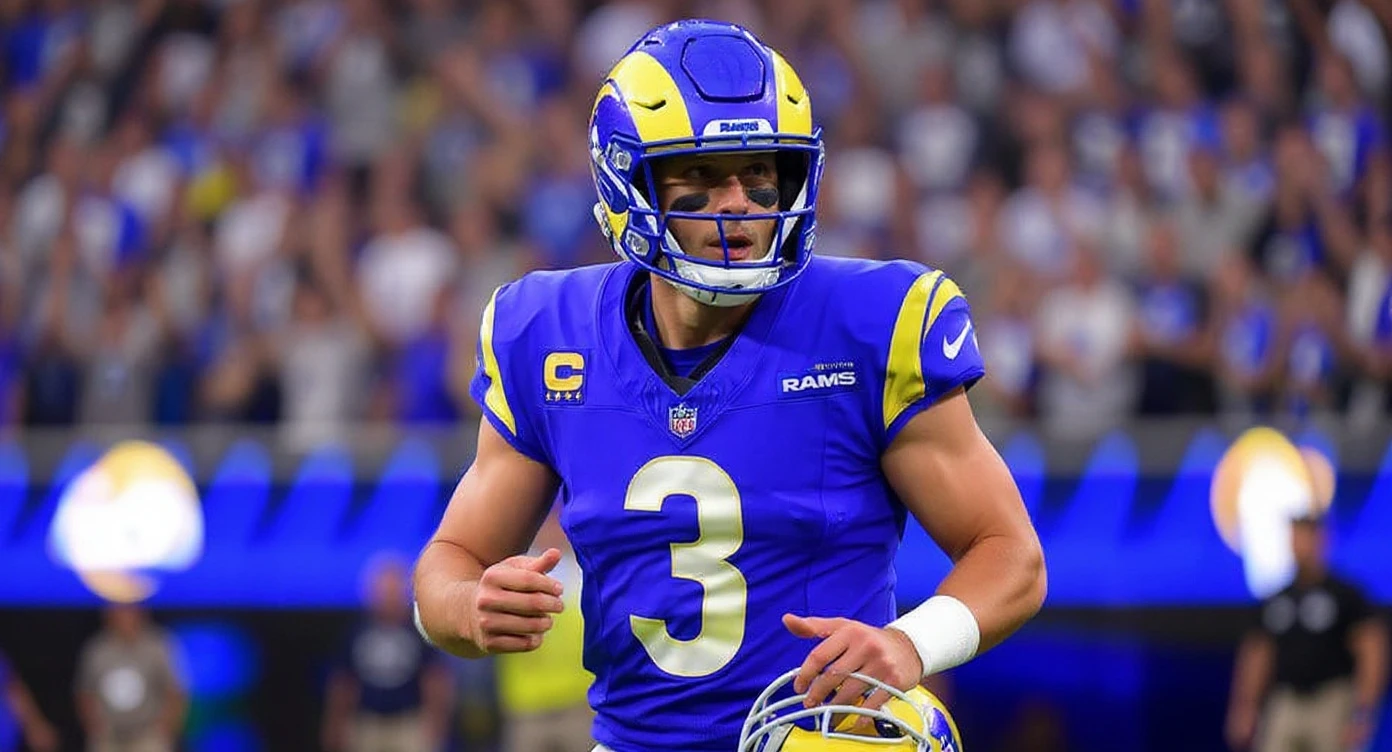
Matthew Stafford’s 2025 MVP victory wasn’t a coronation—it was a nail-biter that’ll be debated in football circles for years. With just 5 points separating him from Drake Maye (366 to 361) and nearly identical first-place vote counts (24 to 23), this represents one of the closest MVP races since 2003, when Peyton Manning and Steve McNair shared the honor.
A handful of voters swaying differently would’ve crowned an entirely different champion. Yet when every vote counted, Stafford’s statistical dominance combined with his proven consistency across both regular season and playoff action gave him the edge. Officially announced February 5th, 2026, at the 15th NFL Honors ceremony, the award reflected the razor-thin distinction between excellence and historic excellence.
Stafford prevailed over a competitive field that included Josh Allen, Trevor Lawrence, and Christian McCaffrey, each commanding their own compelling narratives. This wasn’t just about numbers; it underscored the broader competitive landscape of the 2025 season that produced multiple historic performances.


Want to know what people are really saying? Don’t miss the buzz from Reddit at the end!
The 37-Year-Old Quarterback Defying Father Time
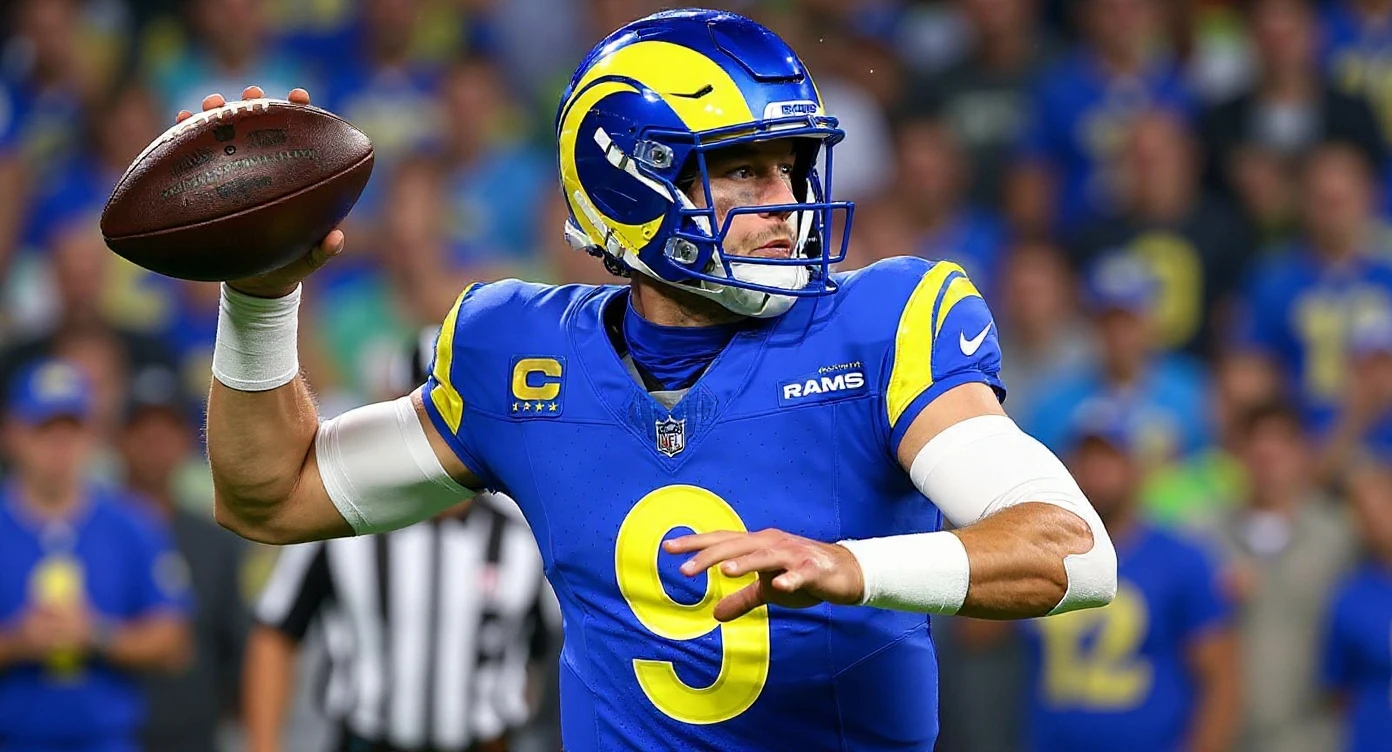
At 37 years old, Stafford isn’t supposed to be leading league-wide statistical races in the modern NFL. Yet the Los Angeles Rams quarterback dominated the 2025 season with 4,707 passing yards and 46 touchdowns—both category leaders across the entire league.
In achieving both milestones simultaneously for the first time in his career, Stafford also posted a career-high passer rating of 109.2, a remarkable testament to his precision and decision-making at an age when most quarterbacks contemplate retirement. He threw just eight interceptions, maintaining elite efficiency while carrying one of football’s heaviest workloads. His nearly 6-to-1 interception-to-touchdown ratio underscores his exceptional command.
Beyond regular season accolades, Stafford earned his third Pro Bowl selection and his first-ever Associated Press first-team All-Pro honor—a distinction that cemented his status among the league’s elite. Turning 38 just days after his MVP announcement, Stafford proved this wasn’t a veteran coasting on reputation; it was peak performance from someone many assumed had left their best days behind.
Why Drake Maye’s Historic Rookie Season Wasn’t Quite Enough
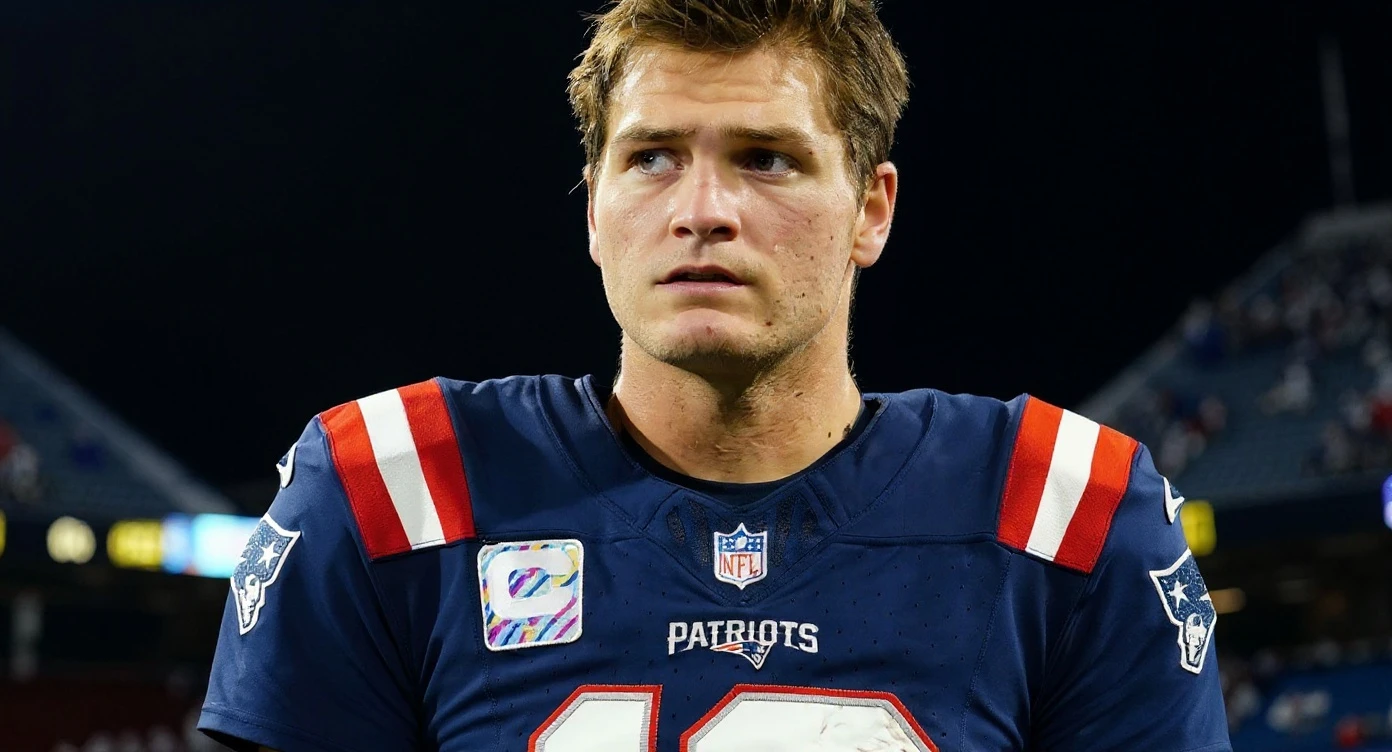
Drake Maye’s emergence as an MVP contender in his rookie year reshaped expectations for what’s possible in a quarterback’s first professional season. The New England Patriots passer finished with 4,394 passing yards and 31 touchdowns against just eight interceptions—numbers that’d constitute an exceptional season for most quarterbacks.
His near-miss reflected the formidable challenge of competing against a statistical force operating at an historically elite level. Maye’s 72% completion rate, the highest in the NFL, exemplified his precision, yet advanced analytics revealed a complicating factor: he posted a -17.7 EPA (Expected Points Added) as a passer in the playoffs—the worst mark for any conference-winning quarterback in the NextGenStats era since 2016—a metric that likely influenced voters seeking proven postseason consistency.
Despite finishing second in MVP voting with 361 points to Stafford’s 366, Maye earned second-team All-Pro honors and secured his second Pro Bowl selection on the initial ballot. The fact that Maye pushed a 37-year-old league-leader to the wire signals his arrival as an elite NFL talent with tremendous upside.
The Rams’ Unexpected Ascent: How Stafford’s MVP Season Built a Playoff Team
Behind Stafford’s MVP-caliber play, the Los Angeles Rams surged to a 12-5 record and claimed the NFC’s fifth playoff seed, defying preseason expectations. Stafford’s efficiency and arm talent elevated everyone around him, creating a multiplier effect throughout the roster.
His proven leadership and consistent execution carried the Rams through a challenging postseason until they fell short in the NFC Championship against the Seattle Seahawks. The 2025 awards season underscored the depth of elite performances across the league: the Patriots orchestrated a remarkable turnaround under Coach of the Year Mike Vrabel, rising from 4-13 to 14-3 and positioning themselves for Super Bowl LX against the Seahawks, while defensive standout Myles Garrett set a single-season sack record with 23.
Against this competitive backdrop, Stafford’s ability to elevate the Rams to playoff contention demonstrated why, even at 37, his MVP award reflected genuine, transformative excellence.
Stafford Confirms His Return: One More Chase at Glory
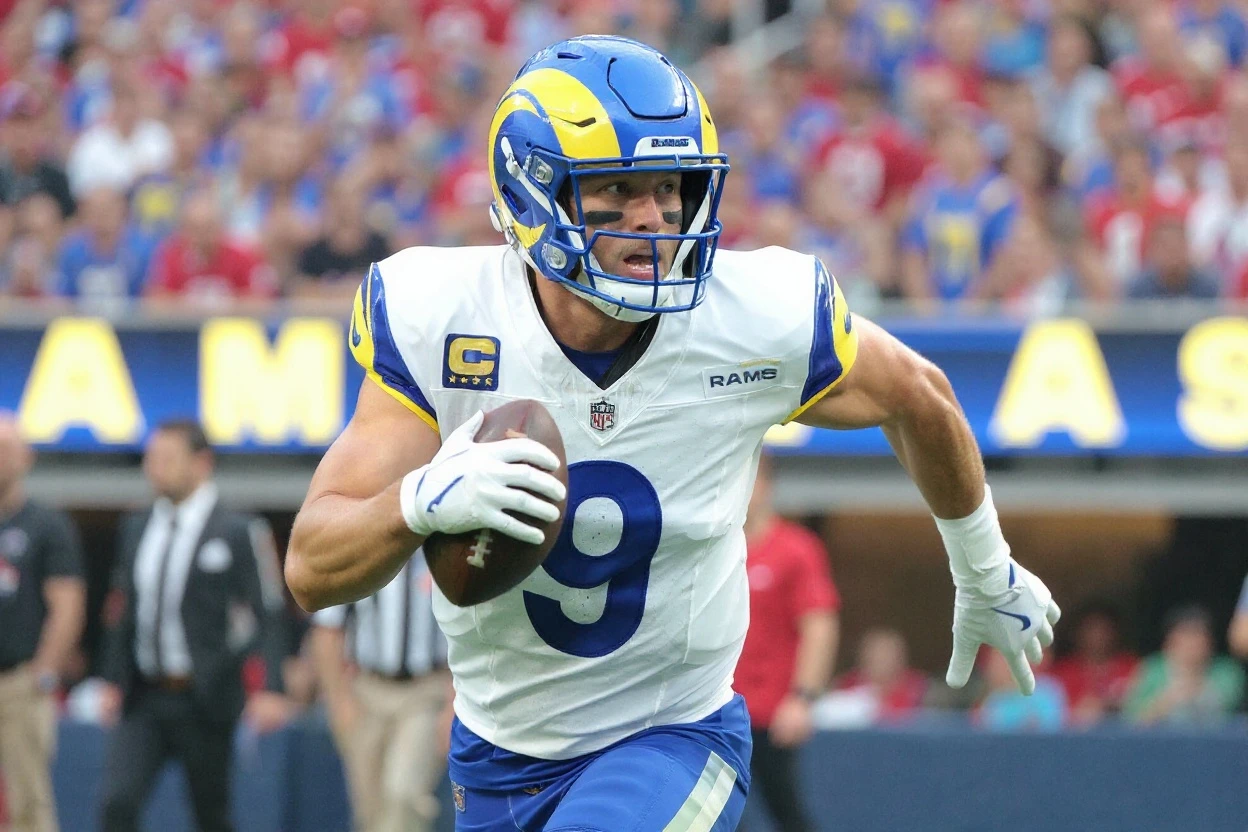
In a move that signals unfinished business, Stafford confirmed he’ll return for his 18th season in 2026, refusing to let this MVP award be anything other than fuel for continued excellence.
Despite nearing 40, the MVP winner isn’t ready to hang up his cleats—a rarity in professional football. This commitment means the Rams’ll field their MVP-caliber quarterback again next year, a rare opportunity to build around proven excellence. His decision raises an intriguing question: is this MVP the final chapter of a legendary career, or the beginning of another unexpected run?
For a quarterback who’s already redefined what’s possible in the twilight of an NFL career—and who won a Super Bowl championship after joining the Rams from his 12-year tenure with Detroit—the answer remains tantalizingly uncertain. The 2026 season promises to be compelling regardless.

The Debate That Wasn’t Close—Until It Was
When the margins are this tight, every detail matters. The single-vote difference between Stafford and Maye reflects a fundamental tension in how the football world evaluates excellence: should voters prioritize regular season statistical dominance, or does postseason performance carry enough weight to tip the scales?
The answer, as the voting totals suggest, remains divisive. Stafford’s credentials were unmistakable—the league-leading passing yards and touchdowns, combined with his career-best efficiency, presented an almost overwhelming statistical case. Yet Maye’s rookie-year brilliance challenged conventional wisdom about how quickly a young quarterback can enter the elite conversation, making each voter’s choice a genuine judgment call rather than an obvious conclusion.
Beyond the headline narrative of Stafford versus Maye, a more curious subplot emerged: the outlier votes. Some voters cast their ballots for quarterbacks who, while excellent in their own right, seemed to occupy a different tier of consideration. These contrarian selections reflect a deeper truth about MVP voting—that it remains fundamentally subjective, driven by individual evaluative frameworks rather than a universal formula.
One voter’s defensive-minded champion could easily be another’s questionable choice. The existence of these minority votes doesn’t diminish Stafford’s victory, but rather emphasizes how fragmented the electorate truly is when forced to choose between multiple deserving candidates.