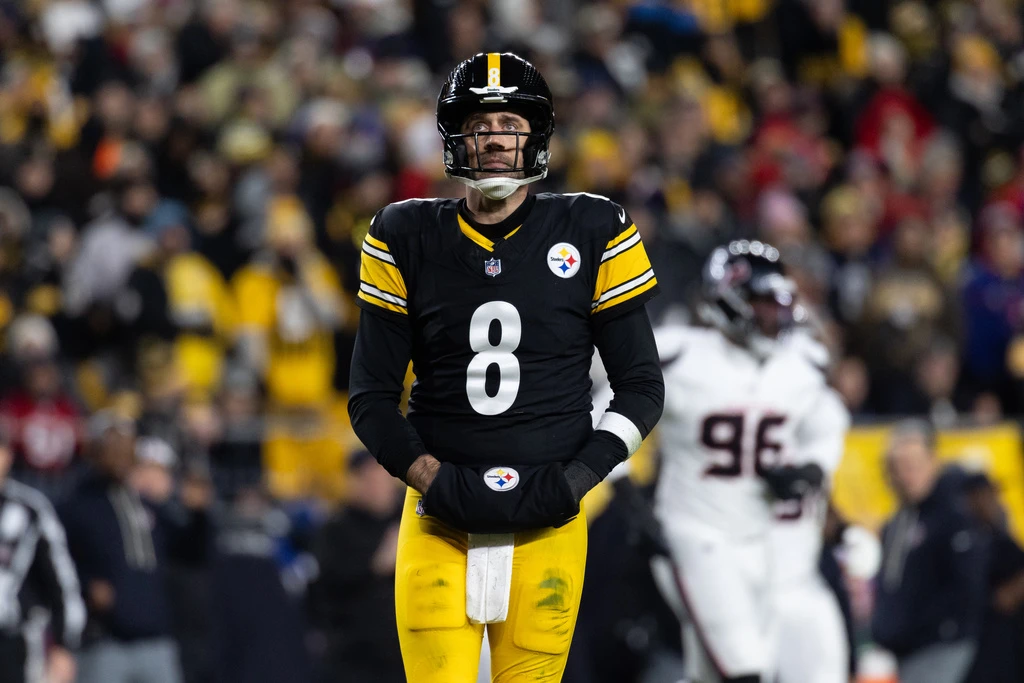
Aaron Rodgers stands at a crossroads few elite athletes ever face—the deliberate choice to author a final chapter rather than fade away. After nearly two decades defining excellence with the Green Bay Packers, one of football’s most talented quarterbacks has pivoted toward what many are calling his “Goodbye Tour.”
Rodgers established himself as one of the greatest quarterbacks of all time since being selected by Green Bay in the first round of the 2005 NFL draft. His move to the Pittsburgh Steelers isn’t merely a late-career transaction; it represents a conscious choice to extend a legendary narrative on different terms.
Will this season cement his Hall of Fame legacy, or will it risk tarnishing years of achievement? Yet beneath the surface lies a more pressing uncertainty: NFL insider Aditi Kinkhabwala reports those close to Rodgers believe there’s a “minuscule chance” he returns to Pittsburgh for 2026, suggesting this supposed final chapter may itself be rewritten before it concludes.
For Rodgers, whose career has been synonymous with clutch performances and impossible moments, stepping into a new uniform at this stage signals something deeper than desperation or nostalgia. This potential final season has become the most compelling story in professional football.
The Impossible Comeback That Rewrote the Script
In a moment tailor-made for Hollywood, Rodgers engineered a late-game masterpiece against the Baltimore Ravens, leading the Steelers to a stunning 26-24 victory.
With championship-caliber pressure mounting and opponents sensing an opportunity to exploit questions about his age and durability, he delivered the game-winning strike—a throw embodying the very essence of why fans have worshipped at the altar of his talent for decades.
Best VOD Services
Paramout+
Paramout+
- Includes NFL on CBS, UEFA Champions League, soccer, UFC, and other major live events.
- Best value pick for casual fans who want big-name sports at a low monthly price.
- Combines mainstream U.S. sports and international soccer at the lowest price among these options.
ESPN+
ESPN+
- Best for fans who want everyday sports depth without paying for a full live-TV bundle
- Stream thousands of live events including college sports, NHL, soccer, golf, tennis, and UFC content.
- Offers the strongest mix of college sports and ESPN-exclusive coverage at a lower price than cable-style services.
DAZN

DAZN
- Best known for boxing, MMA, fight nights, and select international soccer.
- Best for combat sports fans who want year-round access to boxing and fight programming.
- More specialized than the others, with the clearest focus on boxing and fight sports rather than all-around U.S. sports coverage.
FUBO
FUBO
- Watch NFL, NBA, MLB, NHL, college sports, soccer, golf, NASCAR, and more across major live channels.
- Best cable replacement for sports fans who want to pick and choose live games, local channels, and full sports-network access.
- The only service here that feels like a complete live-TV sports hub, not just a standalone streaming app.
This wasn’t simply a victory; it was a referendum on whether one of the NFL’s greatest minds could still navigate elite competition. Against a Ravens defense built to pressure quarterbacks and create turnovers, he remained composed, reading defenses with surgical precision and executing seemingly impossible throws.
Throughout 2025, Rodgers demonstrated remarkable efficiency: 24 touchdowns against just 7 interceptions. He now ranks first on the NFL’s all-time regular-season passer rating list and boasts the best touchdown-to-interception ratio in NFL history at 4.34:1, with the league’s second-lowest career interception percentage at 1.4 percent.
For observers questioning whether age and injury had finally caught up with one of football’s most gifted competitors, his 2025 performances provided resounding answers—proving excellence remains within reach regardless of the uniform.
From Green Bay Icon to Pittsburgh’s Surprising Savior
The symbolism couldn’t be more profound. The quarterback who defined Green Bay’s recent identity now wears black and gold, representing a franchise desperate for quarterback redemption. This transition challenges fundamental assumptions about athlete loyalty, legacy, and reinvention in professional sports.
Rodgers’ trajectory mirrors an earlier destiny: in Super Bowl XLV, he led the Packers to victory over these very Steelers, earning Super Bowl MVP honors. Now, fourteen years later, he wears the same uniform as that vanquished opponent—a full-circle narrative underscoring football’s unpredictability.
Pittsburgh, a city with an extraordinary quarterback legacy, now finds itself with a potential savior wearing historically significant colors. The integration process presented challenges; according to Ian Rapoport and Tom Pelissero, Rodgers pushed to play against Chicago following his trade, but the turnaround proved too quick for game readiness.
Best VOD Services
Paramout+
Paramout+
- Includes NFL on CBS, UEFA Champions League, soccer, UFC, and other major live events.
- Best value pick for casual fans who want big-name sports at a low monthly price.
- Combines mainstream U.S. sports and international soccer at the lowest price among these options.
ESPN+
ESPN+
- Best for fans who want everyday sports depth without paying for a full live-TV bundle
- Stream thousands of live events including college sports, NHL, soccer, golf, tennis, and UFC content.
- Offers the strongest mix of college sports and ESPN-exclusive coverage at a lower price than cable-style services.
DAZN
DAZN
- Best known for boxing, MMA, fight nights, and select international soccer.
- Best for combat sports fans who want year-round access to boxing and fight programming.
- More specialized than the others, with the clearest focus on boxing and fight sports rather than all-around U.S. sports coverage.
FUBO
FUBO
- Watch NFL, NBA, MLB, NHL, college sports, soccer, golf, NASCAR, and more across major live channels.
- Best cable replacement for sports fans who want to pick and choose live games, local channels, and full sports-network access.
- The only service here that feels like a complete live-TV sports hub, not just a standalone streaming app.
For a franchise searching for answers, an elite quarterback capable of miraculous comebacks offers something beyond statistics: hope that championship dreams remain attainable, though that hope is tempered by practical realities of team chemistry and preparation time.
Commitment Confirmed: Rodgers Signs and Shows Up
Reports from Pittsburgh Post-Gazette’s Gerry Dulac provide concrete confirmation that Rodgers has pledged to sign a contract and participate in minicamp sessions. This isn’t speculation; these are tangible actions demonstrating genuine commitment to the franchise.
His presence at minicamp signals more than contractual obligation—it represents personal investment in understanding the system, building chemistry, and proving his interest extends beyond symbolic gestures. Yet the stakes extend beyond the immediate present. The Steelers’ offseason planning hinges entirely on Rodgers’ future decision, with organizational clarity required before March 11th.
If he opts to retire or pursue other opportunities, the uncertainty about whether he returns to Pittsburgh for 2026 transforms this final chapter into something genuinely unpredictable—Pittsburgh has contingency plans: Kyler Murray, Malik Willis, or Anthony Richardson.
New head coach Mike McCarthy recently expressed a desire for Rodgers’ return, though reports suggest this wasn’t primarily an attempt to convince him. For an organization that’s invested significantly in acquiring a future Hall of Famer, Rodgers’ immersion in team activities validates that this partnership is substantive.
The Steelers, founded in 1933 and the seventh-oldest NFL franchise, bring a storied legacy—six Super Bowl titles and championship-decorated history.
Best VOD Services
Paramout+
Paramout+
- Includes NFL on CBS, UEFA Champions League, soccer, UFC, and other major live events.
- Best value pick for casual fans who want big-name sports at a low monthly price.
- Combines mainstream U.S. sports and international soccer at the lowest price among these options.
ESPN+
ESPN+
- Best for fans who want everyday sports depth without paying for a full live-TV bundle
- Stream thousands of live events including college sports, NHL, soccer, golf, tennis, and UFC content.
- Offers the strongest mix of college sports and ESPN-exclusive coverage at a lower price than cable-style services.
DAZN
DAZN
- Best known for boxing, MMA, fight nights, and select international soccer.
- Best for combat sports fans who want year-round access to boxing and fight programming.
- More specialized than the others, with the clearest focus on boxing and fight sports rather than all-around U.S. sports coverage.
FUBO
FUBO
- Watch NFL, NBA, MLB, NHL, college sports, soccer, golf, NASCAR, and more across major live channels.
- Best cable replacement for sports fans who want to pick and choose live games, local channels, and full sports-network access.
- The only service here that feels like a complete live-TV sports hub, not just a standalone streaming app.