
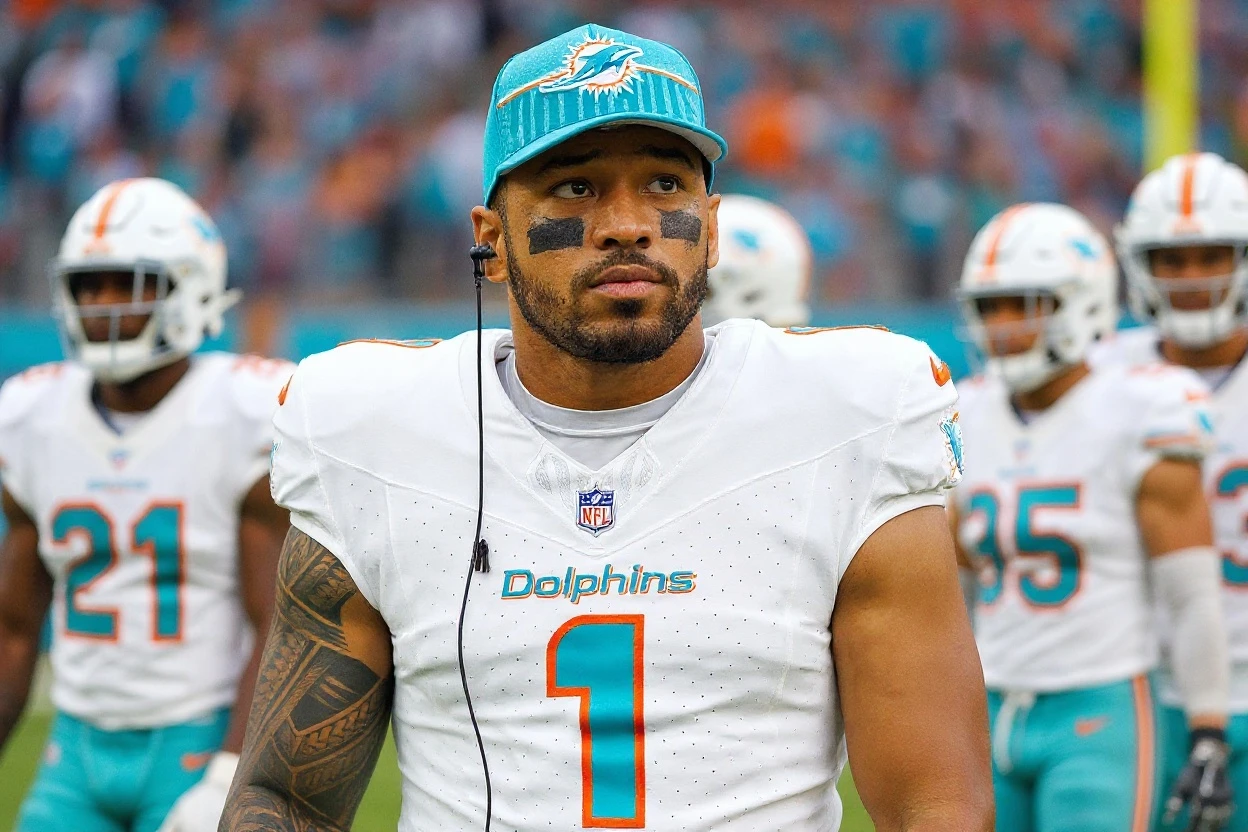
Tua Tagovailoa’s massive contract extension in July 2024 was positioned as a turning point for the Miami Dolphins franchise. The four-year, $212.4 million commitment represented a decisive statement: the team had found its franchise quarterback and was ready to compete at the highest level. Yet within months of inking one of the NFL’s most lucrative deals, head coach Mike McDaniel faces an uncomfortable reality—he’s actively considering replacing the player he built his offense around. The statistical deterioration has been stark. Across 11 games in 2024, Tagovailoa accumulated 2,867 passing yards while throwing just 19 touchdowns against a league-leading 15 interceptions—a ratio that fundamentally undermines offensive efficiency. Only three wins in Tagovailoa’s last 15 starts against winning teams further underscore this collapse. What was supposed to be a solution has become a nightmare of historic proportions. This situation mirrors broader league trends, where franchises increasingly scrutinize expensive quarterback investments. Similar to Trevor Lawrence’s $275 million extension with Jacksonville, Tagovailoa’s deal exemplifies how elite contracts can backfire when on-field performance falters, forcing organizations into institutional paralysis. This 2024 collapse marks the first time McDaniel’s tenure has ended without a playoff berth, as the Dolphins finished 8-9—a dramatic reversal from the Pro Bowl seasons of 2022 and 2023, when Tagovailoa led the league in passer rating and passing yards.
Want to know what people are really saying? Don’t miss the buzz from Reddit at the end!
One Monday Night Changed Everything for Miami
Monday Night Football against Pittsburgh wasn’t just another disappointing loss—it was the moment that clinched the Dolphins’ elimination from playoff contention for the second consecutive season. The game exposed the core dysfunction plaguing Miami all year, with Tagovailoa managing just 65 yards of passing through three complete quarters. His performance combined the worst elements of quarterback inconsistency: poor decision-making, an inability to move effectively under pressure, and another interception adding to his career-worst total. What made this moment particularly crushing was McDaniel’s visible resignation on the sideline. The coach’s demeanor suggested this wasn’t merely frustration with one bad game, but the culmination of a pattern too glaring to ignore. Compounding the quarterback’s struggles, Miami’s offensive infrastructure showed limitations throughout 2024, generating 5,112 total yards with 3,120 passing yards and 1,992 rushing yards—an offense increasingly reliant on a dysfunctional aerial attack. This narrative shift reflects a deeper organizational crisis. The Dolphins haven’t won a playoff game since 2000, experiencing the longest postseason drought in the NFL—a decades-long struggle punctuated only by brief playoff appearances in 2001, 2008, 2016, 2022, and 2023. A single Monday night had shifted expectations from patience and development to immediate action required.
The Excuses Are Running Out—Height to EPA Metrics
When pressed about his catastrophic performance against Cleveland—12 of 23 completions for 100 yards with three interceptions—Tagovailoa offered an unconventional explanation: his height made it difficult to see over his offensive linemen. While physical limitations are legitimate quarterback considerations, the advanced analytics tell a far grimmer story. EPA per play, measuring efficiency on every down, ranks Tagovailoa 29th among qualifying quarterbacks. Success rate slots him 31st. These rankings don’t fluctuate based on vertical clearance—they reveal fundamental deficiencies in decision-making, timing, and execution. The disconnect between external excuses and statistical evidence becomes impossible to ignore. Compounding these concerns is Tagovailoa’s well-documented injury history and documented struggles when defenses keep him in the pocket for extended periods, vulnerabilities that have intensified rather than resolved throughout his career. Elite quarterback contracts typically include performance-based metrics and accountability clauses designed to enforce standards, suggesting Tagovailoa’s struggles may trigger specific contractual provisions complicating his status.
Why McDaniel’s Desperation Moves Signal Dolphins Dysfunction
The presence of Zach Wilson and rookie Quinn Ewers on Miami’s depth chart tells the real story of organizational crisis. Neither would reasonably be considered an upgrade to Tagovailoa under normal circumstances, yet McDaniel is reportedly exploring both as potential alternatives. This isn’t optimism about finding a better quarterback—it’s desperation born from a financial trap. Tagovailoa’s contract extends through 2028 with annual cap hits of at least $53 million, leaving Miami unable to move on without devastating long-term consequences. Notably, Ewers carries concerning inconsistency and decision-making issues in college—hardly a profile suggesting NFL success without significant development. The Dolphins are locked into a commitment to a quarterback they’ve lost confidence in, creating institutional paralysis. Meanwhile, Miami’s offensive execution deteriorated across the board, unable to maintain effective time of possession—a critical factor in managing defenses and protecting an inconsistent quarterback. This organizational trap reflects the franchise’s broader struggles. Since drafting Tagovailoa fifth overall in 2020, as CBS News documented, the team has cycled through hope and disappointment, experiencing only brief windows of success before facing harsh reality: sustained excellence remains elusive. They can’t afford to cut him, can’t trade him without absorbing massive dead cap, and can’t confidently hand the offense to him. These converging forces exemplify how teams increasingly face the impossible choice: persevere with struggling quarterbacks or absorb catastrophic financial penalties for moving on.

The Reckoning: How a Franchise Lost Faith in Its Most Expensive Investment
The collective sentiment surrounding Miami’s quarterback dilemma reflects a deeper crisis of confidence that extends beyond mere statistical underperformance. While Tagovailoa’s on-field struggles are undeniable, the discussion around his future reveals a franchise caught between competing pressures: the recognition that change may be necessary and the paralyzing realization that viable alternatives are limited. One recurring theme centers on Tagovailoa’s well-documented injury history and its potential lingering effects on his decision-making and physical capabilities. The concern isn’t simply about current health status—it’s about whether a quarterback who has endured multiple significant head injuries can truly return to elite performance levels. This raises uncomfortable questions about organizational responsibility: Did Miami adequately account for these health risks when committing a quarter-billion dollars, or did the franchise prioritize optimism over cautionary prudence? The injury narrative adds a layer of sympathy to Tagovailoa’s plight, complicating what might otherwise be a straightforward case of underperformance warranting replacement.
Yet sympathy for Tagovailoa’s circumstances doesn’t resolve Miami’s fundamental problem: the quarterback replacements being seriously considered represent an awkward admission of just how trapped the franchise truly is. The fact that the organization is exploring journeymen backups and college prospects of questionable readiness signals desperation rather than optimism. A typical organizational decision to replace an underperforming quarterback assumes viable alternatives exist—proven veterans or prospects with genuine upside. When neither category applies, the resulting replacement discussion becomes theater masking organizational dysfunction. This reality underscores a critical truth about modern NFL economics: massive quarterback contracts create institutional paralysis when performance falters. Miami cannot simply move on; the dead cap consequences would cripple the franchise for years. They cannot confidently return to Tagovailoa; his statistical collapse suggests deeper problems than a single bad season. And they cannot find a legitimate successor on the open market. The Dolphins exemplify how elite quarterback deals, once signed, become unmovable objects that teams must navigate around rather than through—a cautionary tale about the risks of long-term commitments in an era of quarterback uncertainty.